A purchase request that says only “sodium pyrophosphate” leaves an important question unanswered: does it mean tetrasodium pyrophosphate (TSPP), or sodium acid pyrophosphate (SAPP)? Confirm the full name and CAS number before comparing offers.
These are different salts. A similar name, white powder or shared application category does not make them interchangeable.
| Identifier | TSPP | SAPP |
|---|---|---|
| Full name | Tetrasodium pyrophosphate | Sodium acid pyrophosphate |
| Another name | Tetrasodium diphosphate | Disodium dihydrogen pyrophosphate |
| Formula | Na4P2O7 | Na2H2P2O7 |
| CAS number | 7722-88-5 (anhydrous) | 7758-16-9 |
Identity references: CDC/NIOSH for TSPP and Sigma-Aldrich for SAPP. These identifiers do not establish any supplier’s grade or batch specification.
SAPP has two hydrogen atoms where TSPP has sodium. Their acid–base behavior differs: an aqueous SAPP solution is acidic, while a TSPP solution is alkaline. That can change a formulation. The ILO/WHO TSPP safety card describes its solution as a weak base. Compare reported pH only when concentration, temperature and preparation conditions are stated; the SAPP example specifies such conditions.

Do not reduce the decision to “TSPP for industry, SAPP for food.” Innophos lists technical products in both families. Select the chemical required by the process, then confirm its grade and specification. An industrial-grade offer does not establish food-use suitability.
Resolve the mismatch before quoting or approving a sample. For example, “sodium acid pyrophosphate, CAS 7722-88-5” is contradictory: the name points to SAPP but the CAS number to anhydrous TSPP. Ask whether the requirement is SAPP (7758-16-9) or anhydrous TSPP (7722-88-5), and compare it against the receiving plant’s specification. A photograph or abbreviation should not override conflicting identity information.
For TSPP, specify anhydrous or hydrated material. The TSPP row above describes the anhydrous substance; a hydrated offer needs its own identity and specification check. Do not compare assay percentages for different forms without the stated basis. Next confirm the grade, application, assay method, water-insoluble matter and any process-specific limits. A TDS describes the offered product, an SDS addresses handling, and a lot-specific COA records test results for an identified batch.
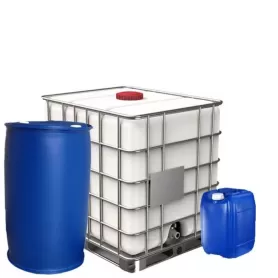
A clearer enquiry: “Please quote industrial-grade anhydrous tetrasodium pyrophosphate, CAS 7722-88-5, against the attached specification. Application: [process]. Quantity: [amount]. Destination: [port/country]. Please confirm packaging and provide the applicable TDS, SDS and available COA documentation.”
See Tairan’s industrial TSPP product page, or send us your specification and application for review. A published product range is not proof that a particular grade or lot meets your requirements.