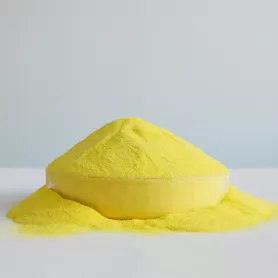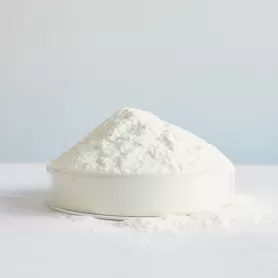
Every week, I get variations of the same inquiry from procurement managers in India, Vietnam, Indonesia, and Bangladesh. It reads something like this:
"Please quote for PAC 30% Al₂O₃, price per MT CFR Mumbai."
That's it. One line. One number.
After 15 years on the production floor—from reactor commissioning to QC sign-off—I can tell you with certainty: a 30% Al₂O₃ figure on a Certificate of Analysis tells you almost nothing about how a product will actually perform in your plant. What it doesn't tell you is the manufacturing process, the basicity stability, the water insoluble content, or the true total cost of ownership (TCO) once that product hits your dosing pumps, membranes, and sedimentation tanks.
This article is my attempt to fix that gap. Let's go deep.
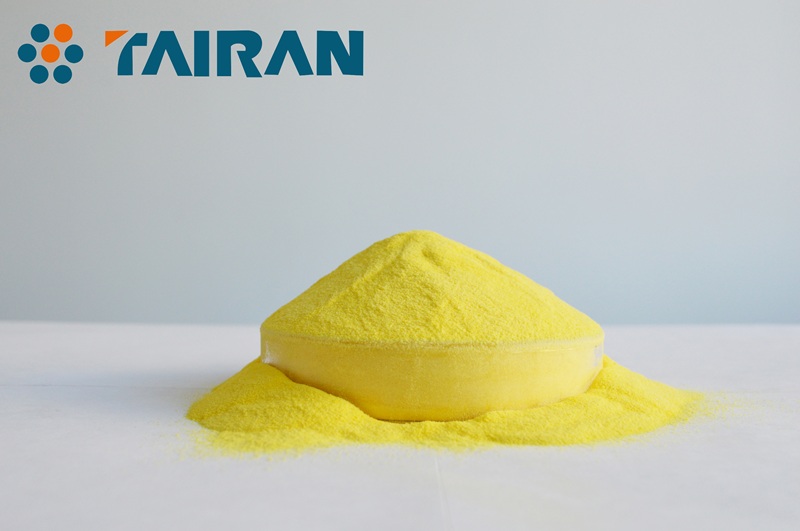
Both spray dried and roller dried PAC begin their lives the same way: as a liquid PAC solution, typically at 10–12% Al₂O₃, produced by reacting aluminum hydroxide with hydrochloric acid under controlled temperature and pressure. The chemistry up to this point is identical. What diverges radically is how that liquid is converted into the solid powder you receive in your 25 kg bags.
Spray Drying: Instantaneous Vitrification
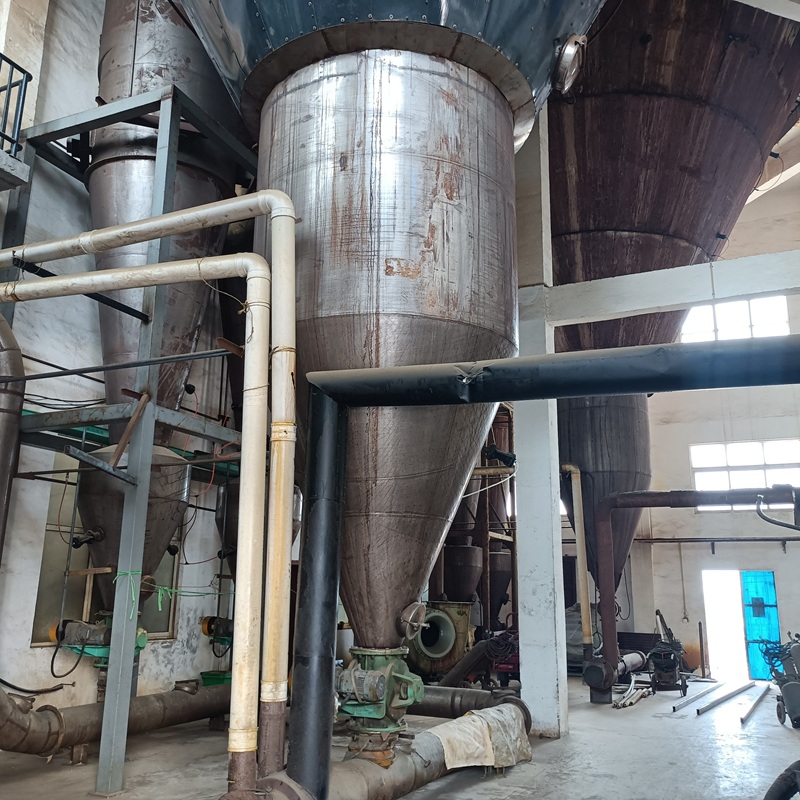
In a spray drying tower, the liquid PAC solution is atomized through high-pressure nozzles into a co-current or counter-current stream of hot air at 180–220°C. Individual droplets—typically 50–200 microns in diameter—are exposed to heat for no more than 5–15 seconds. The water evaporates almost instantaneously, leaving behind a hollow, spherical, glassy particle.
The key physics here: the thermal gradient across each particle is nearly zero. Every part of the droplet experiences the same drying rate. The polymeric Al₁₃ species—specifically the Keggin-ion structure ([AlO₄Al₁₂(OH)₂₄(H₂O)₁₂]⁷⁺) that is responsible for charge neutralization and bridging flocculation—are locked into position cryogenically, without thermal decomposition.
Roller Drying: Mechanical Scraping Under Prolonged Heat
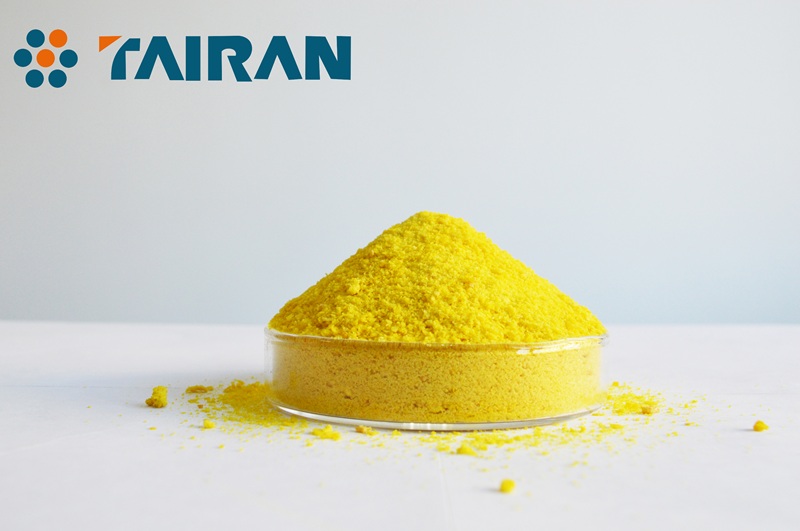
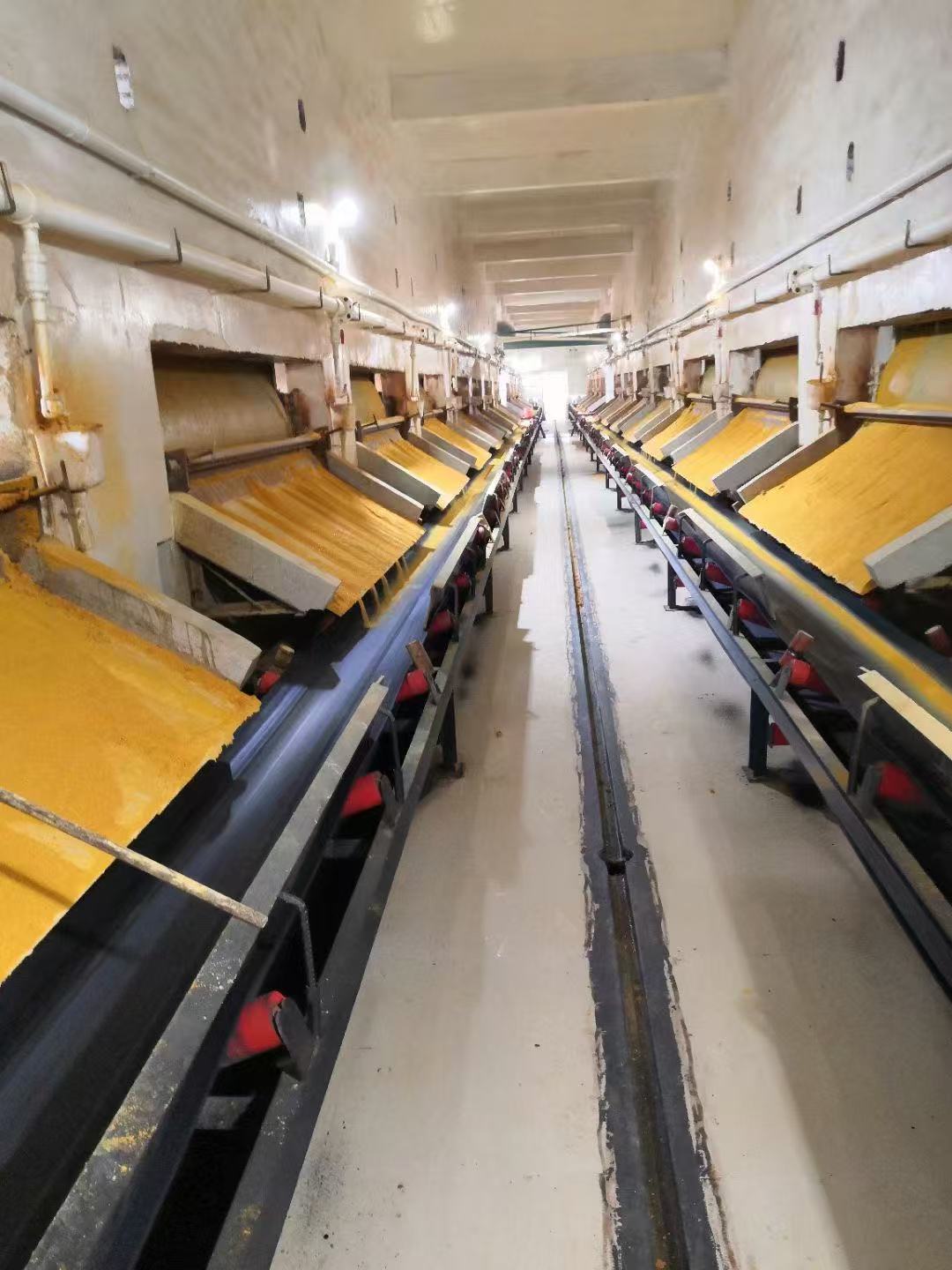
A roller dryer works on a fundamentally different principle. The liquid PAC slurry is fed onto the surface of a large heated drum (surface temperature: 120–160°C), where it forms a thin film. This film remains in contact with the hot drum surface for 30–90 seconds before a mechanical scraper blade peels it off as flakes or a coarse powder.
The problem is not just the longer contact time. It's the localized, non-uniform heat application. The layer of PAC in contact with the drum surface reaches much higher temperatures than the layer exposed to open air. This creates a thermal gradient that:
1. Drives continued polymerization and cross-linking of aluminum species into large, poorly soluble aggregates.
2. Forces partial hydrolysis beyond the intended basicity window.
3. Produces a non-uniform particle morphology—dense, irregular flakes with physically trapped mineral impurities.
The result is a product that, on paper, reads 30% Al₂O₃. In the reactor, it behaves like a completely different chemical.
Basicity is the most important—and most ignored—specification in PAC procurement. Let me explain why.
Defining Basicity
Basicity (BBB) describes the degree of hydroxyl substitution in the aluminum coordination shell. The standard definition is:
B = [OH⁻] / (3[Al³⁺]) × 100%
A basicity of 0% corresponds to pure AlCl₃ (no hydroxyl groups). A basicity of 100% corresponds to Al(OH)₃ (completely hydrolyzed, insoluble aluminum hydroxide). For drinking water and industrial treatment applications, the optimal working range for solid PAC is 70–85%.
Why Basicity Stability Matters More Than the Number Itself
Here is what most buyers don't realize: a single batch average of 75% basicity is meaningless if the standard deviation is ±8%. What matters is consistency within and across batches.
Basicity directly controls the speciation of aluminum in solution:
| Basicity Range | Dominant Al Species | Mechanism | Application Fit |
|---|---|---|---|
| < 50% | Al³⁺ monomers, Al₂(OH)₂⁴⁺ | Charge neutralization only | Low turbidity, colored water |
| 60–75% | Al₆(OH)₁₅³⁺, Al₈(OH)₂₀⁴⁺ | Charge neutralization + adsorption | General raw water |
| 75–85% | Al₁₃O₄(OH)₂₄⁷⁺ (Al₁₃ Keggin) | Charge neutralization + bridging + sweep floc | Optimal for most systems |
| > 90% | Al(OH)₃ colloids | Sweep flocculation only | High turbidity, highly alkaline feed |
The Al₁₃ Keggin ion—dominant in the 75–85% basicity window—is the workhorse species for industrial water treatment. It carries a high positive charge density (+7), an unusually large molecular footprint, and excellent bridging capability across negatively charged colloidal particles.
How the Drying Process Destroys Basicity Consistency
In a roller dryer, the non-uniform thermal gradient causes localized over-hydrolysis. The PAC film closest to the drum surface reaches temperatures where:
Al13O4(OH)24⁷⁺ ——(ΔT > 180°C)——> Al(OH)3↓ + AlCl3 (residual)
The scraped product is thus a heterogeneous mixture: some regions retain good Al₁₃ character, while others have decomposed into insoluble Al(OH)₃ or reverted toward AlCl₃. When you dissolve this product into your dosing tank, you are not working with a uniform chemistry. You're working with a distribution.
Spray drying eliminates this problem structurally. The sub-15-second drying window does not allow for significant hydrolysis beyond the equilibrium state established in the liquid reactor. The basicity of the spray dried particle is, to a first approximation, the basicity of the feed liquor—well-controlled, consistent, and reproducible.
In our production facility, spray dried PAC batches consistently achieve basicity of 75–80% with a batch-to-batch standard deviation of less than ±1.5%. That is a specification we hold to contract, backed by ICP-OES analysis on every production lot.
Water-insoluble content (also called water insolubles or acid insolubles depending on the test method) is the metric that separates operators who understand PAC from those who are simply buying on price.
What "Insolubles" Actually Are
In the context of solid PAC, water insolubles are mineral and polymeric species that do not dissolve at the point-of-use pH and temperature conditions. They originate from:
1. Unreacted aluminum hydroxide feedstock — incompletely dissolved during synthesis.
2. Over-polymerized Al(OH)₃ precipitates — formed during high-temperature roller drying.
3. Silicate and iron mineral contaminants — physically trapped in the dense roller-dried flake structure but excluded from spray-dried hollow spheres due to centrifugal atomization dynamics.
4. Carbonate and sulfate co-precipitates — depending on raw material quality.
A well-controlled spray dried PAC has water insolubles below 0.3% (w/w). A typical roller dried product from a cost-optimized facility runs at 0.8–2.5%, sometimes higher.
To a buyer focused only on Al₂O₃ content, this seems like a rounding error. It is not.
The Physical Damage Cascade
Stage 1 — Dosing System Erosion
Your dry PAC is dissolved in a make-up tank before injection. As concentration rises during dissolution, insoluble particles—now freed from the matrix—remain suspended as a fine slurry. At 200–500 ppm particle loading, the abrasive wear on peristaltic pump rollers, diaphragm membranes, and injection nozzles becomes measurable within 3–6 months of continuous operation. In facilities dosing 5–20 MT/month, pump rebuild or replacement costs of USD 2,000–8,000 per event are routine.
Stage 2 — Clarifier and Filter Fouling
Insoluble particles do not flocculate like colloidal matter. They are dense, hard, and negatively charged—exactly the wrong characteristics for co-precipitation with the floc blanket. Instead, they pass through the sedimentation stage and accumulate on:
● Sand/anthracite gravity filter media: reducing hydraulic conductivity, increasing backwash frequency, and ultimately requiring media replacement 18–24 months ahead of design life.
● Cartridge pre-filters: dramatically shortening replacement cycles (from 90-day design intervals to 15–30 days in documented cases).
Stage 3 — Membrane System Destruction
This is where insolubles cause their most expensive, irreversible damage. For facilities operating UF (Ultrafiltration) or RO (Reverse Osmosis) downstream:
● UF hollow fibers (nominal pore size: 0.01–0.1 μm) are physically abraded by hard aluminum silicate particles passing at high crossflow velocity.
● Once a fiber is compromised, the entire module must be replaced—typical module cost: USD 800–3,500.
● High-insoluble PAC has been directly linked to 3–5× acceleration in UF/RO membrane replacement cycles in industrial case documentation.
Let me make that concrete with a real scenario:
Case Reference — Textile Dyeing Plant, Gujarat, India (2022):A facility switched from spray dried PAC (insolubles: 0.28%) to a locally sourced roller dried product (insolubles: 1.74%) to achieve a USD 18/MT cost saving. Over 8 months: two UF module banks required full replacement (combined cost: USD 47,000), dosing pump maintenance costs increased by USD 6,200, and filter media was replaced 14 months ahead of schedule (USD 9,500). Net loss against procurement savings: USD 58,000+. The facility reverted to spray dried PAC in Q1 2023.
The arithmetic is not complicated. The insoluble content specification is not a bureaucratic checkmark—it is a load-bearing number in your operational cost model.
Not every application demands spray dried PAC. Here is a transparent, application-based selection guide:
| Application | Recommended Type | Critical Spec | Rationale |
|---|---|---|---|
| Drinking Water Treatment | Spray Dried | Insolubles < 0.3%, Basicity 70–80% | Regulatory compliance; zero tolerance for residual contaminants in finished water |
| UF/RO Pretreatment | Spray Dried | Insolubles < 0.3%, Dissolution rate > 95% @ 5 min | Membrane protection is non-negotiable |
| Papermaking (Retention Aid) | Spray Dried | Basicity 75–85%, Low sulfate | Consistent charge density for fiber retention; sulfate interferes with wet-end chemistry |
| Textile/Dyeing Wastewater | Spray Dried (high basicity) | Basicity 80–85%, Color removal index | Color-reactive Al₁₃ species required; insolubles foul color measurement sensors |
| Mining/Tailing Thickening | Roller Dried (acceptable) | Al₂O₃ ≥ 28%, Cost/MT | High solids loading dilutes insoluble impact; cost per unit Al₂O₃ is dominant variable |
| Municipal Sewage (Primary) | Either | Al₂O₃ ≥ 28%, pH range 6–8 | Relatively tolerant application; roller dried viable if insolubles confirmed < 1.0% |
| Industrial Cooling Water (Blowdown) | Roller Dried (acceptable) | Al₂O₃ ≥ 28%, Cost/MT | No membrane exposure; chemical oxygen demand load tolerates some insolubles |
| Food & Beverage Wastewater | Spray Dried | Food-grade Al₂O₃ source, Insolubles < 0.2% | Cross-contamination risk in effluent reuse scenarios |
Read-across rule: Any system with downstream membrane filtration, precision instrumentation, or potable water end-use should be treated as a mandatory spray dried application, regardless of cost differential.
At Henan Tairan Chemical, we made a deliberate infrastructure investment in full-tower spray drying capacity at our production base in Zhengzhou. This was not a marketing decision. It was an engineering decision based on the chemistry I've described above.
Here is what our quality system guarantees on every production lot:
Raw Material Traceability
Our aluminum hydroxide feedstock is sourced exclusively from Bayer-process gibbsite with a controlled iron content of < 0.02% Fe₂O₃ and a particle size distribution D90 < 45 μm. Iron is the most common source of elevated insolubles in commodity PAC—it co-precipitates with aluminum hydroxide during synthesis and is nearly impossible to dissolve under standard pH conditions.
Liquid Phase QC Before Spray
Every batch of liquid PAC undergoes inline measurement of:
● Aluminum concentration (ICP-OES, target ±0.3% relative)
● Free chloride (potentiometric titration)
● Basicity (titration, target 75–80% ±1.5%)
● Turbidity of feed liquor (target < 5 NTU — high turbidity in the feed is a leading indicator of insoluble content in the dried product)
Batches that fall outside specification windows are re-circulated to the reactor, not spray dried.
| Parameter | Tairan Controlled Range |
|---|---|
| Inlet air temperature | 195 ± 5°C |
| Outlet air temperature | 85 ± 3°C |
| Atomization pressure | 18–22 bar |
| Feed liquor flow rate | ±2% of setpoint (PLC-controlled) |
| Particle size D50 | 35–65 μm |
The outlet temperature control is critical. Too high, and you risk localized thermal decomposition of Al₁₃ species in the collecting chamber. Too low, and residual moisture causes caking and inter-particle aggregation that mimics insoluble behavior in use.
| Parameter | Tairan Specification | GB/T 22627-2022 Standard |
|---|---|---|
| Al₂O₃ content | ≥ 30.0% | ≥ 28.0% (Type I) |
| Basicity | 75–80% | 40–90% |
| Water insolubles | ≤ 0.3% | ≤ 1.5% (Drinking Water Grade) |
| pH (1% solution) | 3.5–5.0 | 3.5–5.0 |
| Arsenic (As) | ≤ 1 ppm | ≤ 2 ppm |
| Lead (Pb) | ≤ 1 ppm | ≤ 2 ppm |
| Moisture | ≤ 3.5% | ≤ 4.0% |
Every outgoing shipment is accompanied by a full ICP-OES elemental analysis report and a basicity titration certificate signed by our QC laboratory director. We retain reference samples from every production batch for 24 months.
Our insoluble specification of ≤ 0.3% is not a marketing claim. It is a contractual specification enforced by third-party testing at SGS or Intertek upon customer request.
I started this article with a one-line inquiry: "Please quote for PAC 30% Al₂O₃."
After 15 years in this industry, my answer is always the same: tell me more. Tell me your downstream membrane configuration. Tell me your dosing system design. Tell me your regulatory environment for finished water. Tell me your maintenance budget and your membrane replacement frequency today.
Because what we're really quoting is not a bag of white powder. We're quoting the cumulative effect of every process decision made in a reactor vessel, a spray tower, and a QC laboratory—decisions that will echo through your operations for the lifetime of your water treatment system.
The USD 15–30/MT premium that spray dried PAC commands over roller dried alternatives is not a supplier margin exercise. It is a reflection of the energy cost, capital cost, and quality system cost of doing the process correctly. For any application involving membranes, potable water, or precision industrial chemistry, that premium pays for itself in membrane cycle extension alone—typically within 4–8 months of operation.
Specify basicity. Specify insolubles. Ask for batch-level CoA, not product-level averages. And ask whether your supplier is spray drying or roller drying.
The answer to that last question will tell you more about your operational future than any Al₂O₃ figure ever will.
For technical specifications, third-party test reports, or a TCO analysis tailored to your application, contact the Technical Division at Tairan Chemical .
This article reflects the technical position and operational experience of Tairan Chemical's production and R&D team. All case data is based on documented customer feedback and internal application engineering records.