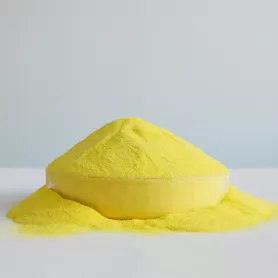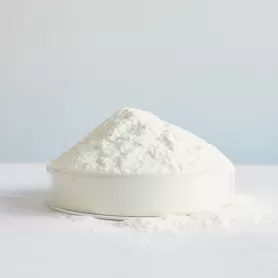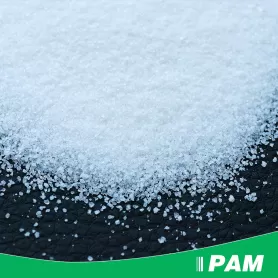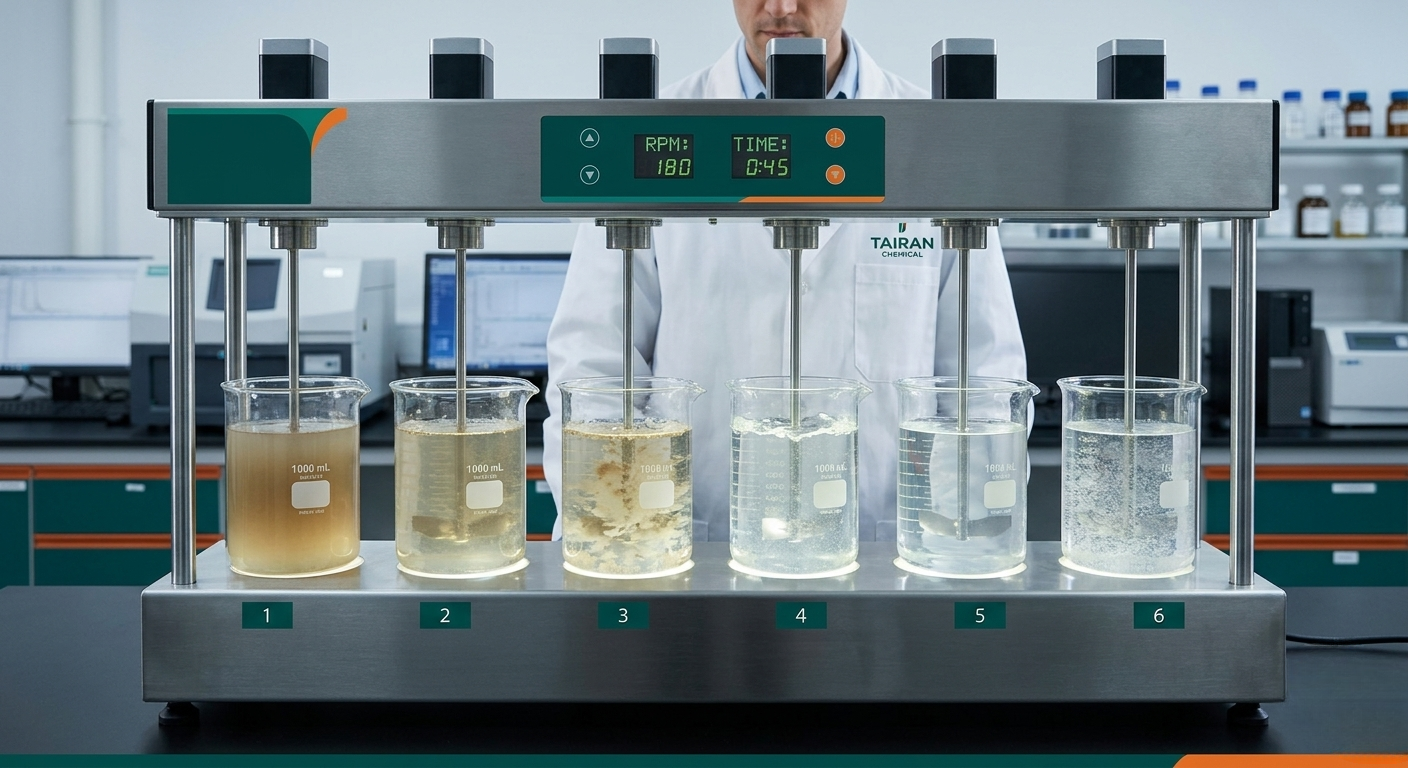
If your facility is running fixed PAC and PAM dosing rates year-round based on a commissioning report from three years ago, you are almost certainly overdosing in some seasons and underdosing in others. Both conditions cost you money. One also risks a compliance violation.
Raw water quality is not static. Upstream rainfall events change suspended solid loads overnight. Seasonal temperature swings alter coagulant hydrolysis kinetics. A new upstream industrial discharge can shift your influent's ionic strength within days.
The jar test is the only tool that closes this feedback loop in real time.
The economics are straightforward. For a mid-scale plant consuming 500 kg of PAC per day at $400/tonne, a 10–15% dosing optimization saves between $7,300–$10,950 annually — on PAC alone, before accounting for PAM, sludge disposal, and dewatering costs. The jar test apparatus costs under $2,000. A technician runs a complete six-beaker matrix in under ninety minutes.
There is no wastewater treatment optimization with a better return on technician time.
Every meaningless jar test result I've seen traces back to one of two causes: bad stock solution preparation, or a poorly understood dosing calculation. Get these right before you touch the apparatus.
PAC Stock Solution — 1% w/v
Dissolve in approximately 80 mL of distilled water, then make up to 100 mL. Use within 24 hours — PAC hydrolysis continues in solution, and aged stock produces inconsistent results.
PAM Stock Solution — 0.1% w/v and the ’Fish-Eye’ Problem

This is where most operators go wrong — and the consequences are more serious than they appear.
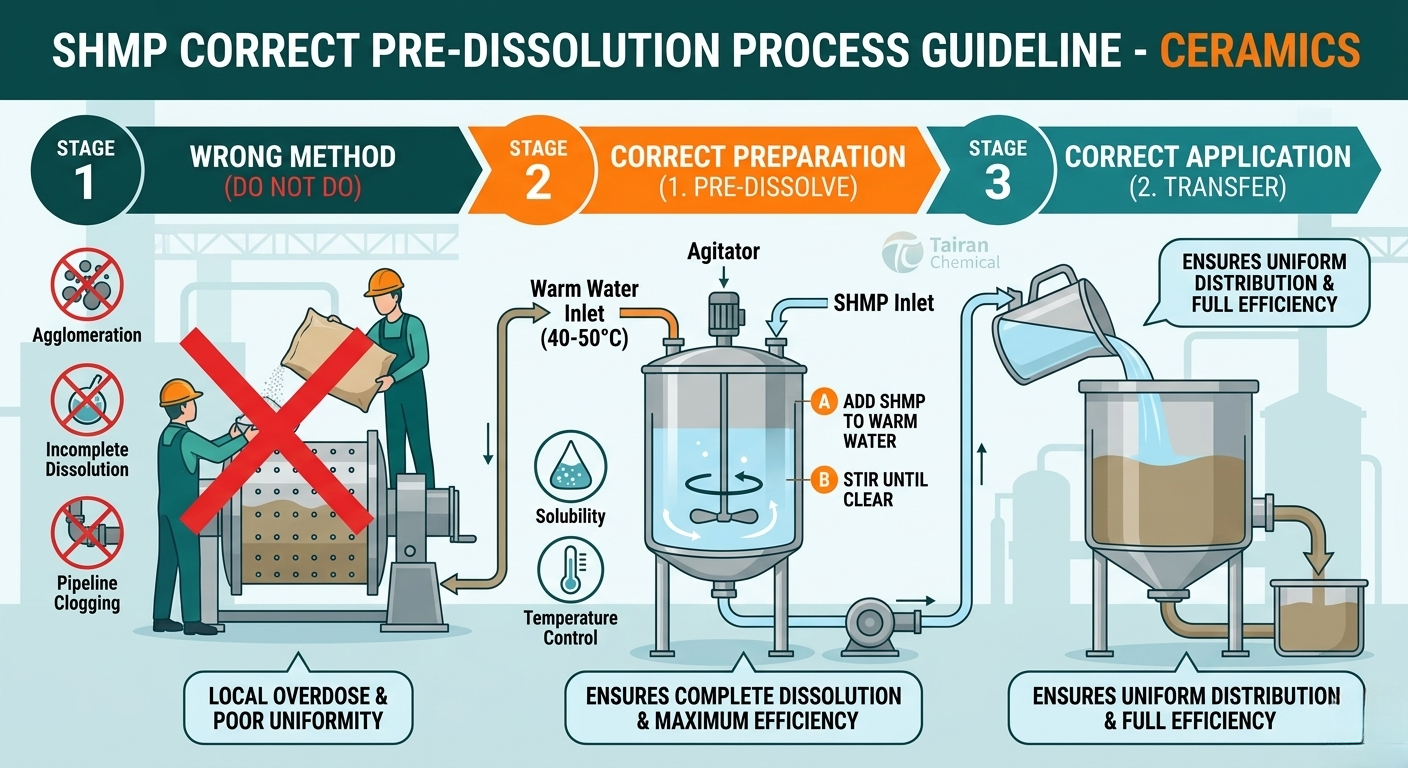
A Vietnamese paper mill I consulted in 2022 had a persistent mystery: their recorded dosing looked correct on paper, but flocculation efficiency was consistently 30–35% below design spec. The culprit was preparation technique. The operator was pouring PAM powder directly from the bag into the mixing tank without a dispersal step, generating undissolved ’fish-eye’ gel masses throughout the solution. The result: actual PAM delivery to the treatment basin was roughly 35% lower than what the dosing records showed — because a third of the product was stuck in gelatinous clumps that never dissolved. No alarm went off. No parameter looked wrong. The deficit was invisible.
The correct preparation sequence:
● Set water stirring at 200–300 RPM to create a visible vortex
● Add PAM powder slowly in a thin stream into the shoulder of the vortex — never the center
● Reduce to 100–150 RPM and continue mixing for 30–45 minutes until fully clear
● Rest for 30 minutes before use
One more field rule worth enforcing: never configure PAM solution concentration above 0.3% w/v. A dye plant in Gujarat was running PAM at 3.8% concentration — a viscous, adhesive fluid far beyond workable range. In two months, four metering pumps failed. The maintenance team blamed pump quality. The real cause was a formulation decision made at the mixing station. At concentrations above 0.5%, PAM molecular chains cannot fully extend, adsorption bridging efficiency collapses, and the equipment pays the price.
Worked example: 1% PAC stock = . Target dose in beaker:
Run a minimum six-beaker matrix — for example, PAC doses of 10, 20, 30, 40, 50, and 60 mg/L simultaneously. A single data point is not optimization. It is a guess with extra steps.
Step 1: Rapid Mix — Coagulation (Charge Neutralization)
150–200 RPM | 60 seconds
Add PAC stock to all beakers simultaneously. The high mixing intensity distributes PAC hydrolysis products uniformly before local precipitation can occur.
PAC, with structural formula [Al2(OH)nCl6−n]m, releases polynuclear aluminum species that carry significant positive surface charge. These adsorb onto negatively charged colloidal particles, compressing the electrostatic double layer and reducing the repulsion energy barrier. Zeta potential shifts from typically −20 to −30 mV toward zero — this is charge neutralization, and it is what makes particle collision and micro-floc formation possible.
Note for cold-climate operations: below 8°C, PAC hydrolysis kinetics slow measurably. Extend this phase to 90 seconds for winter operation — incomplete charge neutralization at this stage cannot be recovered downstream.
Step 2: Slow Mix — Flocculation (Adsorption Bridging)
40–60 RPM | 3–5 minutes
Reduce speed immediately, then add PAM. The speed reduction protects the fragile micro-floc structures PAC just formed — high shear prevents PAM's long molecular chains from extending and bridging between particles.
Adsorption bridging works as follows: PAM chains adsorb onto one micro-floc surface, extend through solution, and adsorb onto a second micro-floc — physically linking them. This repeats across thousands of micro-flocs simultaneously, building floc masses whose settling velocity scales with the square of diameter:
Doubling floc diameter quadruples settling velocity. This is the mechanism behind PAM's dramatic effect on sedimentation rates.
Step 3: Sedimentation
Zero agitation | 10–15 minutes
Stop mixers completely. Record observations at regular intervals using the table below.
| Beaker | PAC (mg/L) | PAM (mg/L) | Floc Size (mm) | Settling Rate | Clarity at 10 min | Clarity at 15 min |
|---|---|---|---|---|---|---|
| 1 | 10 | — | ||||
| 2 | 20 | — | ||||
| 3 | 30 | — | ||||
| 4 | 40 | — | ||||
| 5 | 50 | — | ||||
| 6 | 60 | — |
After identifying the optimal PAC dose, run a second matrix varying PAM dose at fixed PAC to finalize your PAC:PAM dosing ratio.
Problem A: Micro-Flocs Form but Refuse to Grow or Settle
Most likely causes:
1. pH outside the 6.5–8.0 coagulation window.Below pH 6.0 or above pH 8.5, aluminum speciation shifts unfavorably. Measure influent pH before testing and adjust with dilute H2SO4 or NaOH if needed.
2. PAM molecular weight mismatched to the application.This is subtler than most operators expect, and the correct answer is sometimes counterintuitive. In a Chilean copper mine project, persistent fine-particle settling problems led the team to trial progressively higher molecular weight PAM — standard practice for fine particle systems. Results worsened. Reducing molecular weight from 12 million Da to 8 million Da ultimately improved solid-liquid separation efficiency by 9.6%. The diagnosis: the ultra-fine clay fraction (< 2 μm) in that specific ore was experiencing over-bridging with high-MW polymer, producing loose, fragile floc structures. Molecular weight is not a parameter where higher is always better — it must be matched to the particle size distribution of your specific system. The jar test is the only way to identify this.
3. Insufficient PAC dose for high-ionic-strength water.Some industrial effluents contain competing cations that consume PAC capacity before it can act on colloids. Extend your dose matrix to higher concentrations.
Problem B: Clarity Improves Then Deteriorates at High PAC Doses — Restabilization
When PAC is overdosed significantly past the charge neutralization optimum, continued aluminum adsorption drives colloid surface charge past zero into net-positive territory. Electrostatic repulsion returns. The system restabilizes, and turbidity increases.
The jar test dose-response curve will show improving clarity, an optimum zone, then deterioration at high doses. The correct response is to reduce dose, not increase it. This is one of the most common and most expensive misdiagnoses in dosing management.
The Temperature Factor
Below 5°C, PAC hydrolysis slows substantially. Expect optimal PAC dose to increase 10–20% in winter, and allow extended rapid mix time. Run jar tests at actual process water temperature — room-temperature results do not translate to cold-season operations.
Your jar test identifies an optimal PAC dose of and PAM dose of . Your plant processes . The conversion:
Full-scale basins have non-ideal mixing, dead zones, and flow distribution irregularities absent from a controlled beaker. Apply a 5–10% upward adjustment as a starting point:
Start at the lower bound and verify effluent quality before finalizing. Tighten the margin as you gain confidence in the lab-to-plant correlation for your system.
Re-run jar tests whenever:
● Influent turbidity shifts by more than ±30% from baseline
● Seasonal temperature changes exceed 10°C
● A new upstream discharge enters your catchment
● Effluent quality begins drifting without an obvious cause
Section 6: Tairan Chemical — Technical Partnership Beyond the Product
The jar test procedure above works regardless of who supplies your chemicals. But consistent chemical quality is the prerequisite for consistent jar test results. A PAC lot with Al2O3Al content varying by 2% between deliveries shifts your jar test optimum by a corresponding margin. You cannot optimize a process built on variable inputs.
Tairan Chemical's PAC is manufactured to a controlled Al2O3 specification with tolerance of±0.3%, batch-certified with each delivery. Our PAM product range covers the full molecular weight and ionic charge spectrum required across industrial wastewater treatment optimization applications.
For long-term supply partners, our application engineering team provides remote jar test analysis support: send us your observation data and raw water characteristics, and our engineers provide dosing recommendations informed by accumulated field experience. Across clients tracked over 12-month partnerships, systematic jar test optimization has delivered an average reduction in total chemical costs of 13.7% — not an estimate, a tracked figure from actual production records.
Contact our technical team. Bring your jar test data and water quality parameters. We will bring the experience to interpret them.
Tairan Chemical — Precision Chemistry for Industrial Wastewater Treatment, Delivered with Technical Depth.