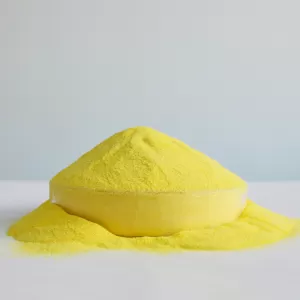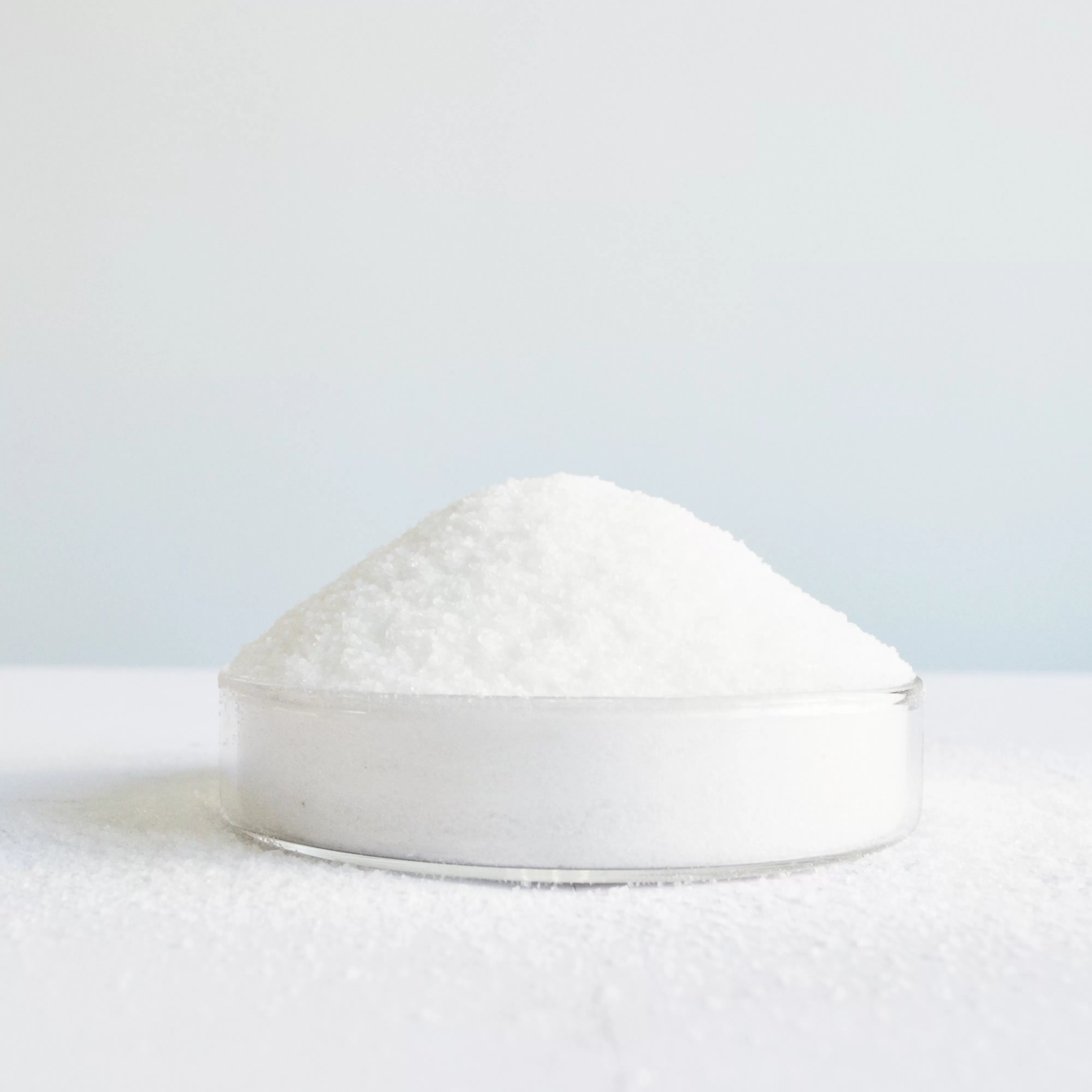
| CAS No.: | 9003-05-8 |
| Formula: | (C3H5NO)n (PAM reference repeat unit) |
| EINECS: | Finished-polymer identifier varies by grade; EC 201-173-7 refers to acrylamide monomer. |
| Type: | Polymer (Anionic Polyacrylamide) |
| Effect: | Flocculation, clarification, thickening and solid-liquid separation |
| Other Names: | Anionic PAM, APAM, polyacrylamide flocculant |
Reference identity only. Exact formulation and finished-polymer identity: see the current grade SDS. Tairan TDS/COA/SDS for the exact grade, lot and destination prevails.
Description
At a glance
Anionic polyacrylamide (APAM) is a water-soluble polymer flocculant used to support clarification, thickening and solid-liquid separation. It is commonly evaluated for inorganic suspended solids and mineral slurries where polymer charge and molecular weight match the process chemistry.
APAM can be considered for industrial wastewater clarification, coal and sand washing, mineral processing and tailings dewatering. It is not a universal fit for every water or slurry, so the final grade and dose should be confirmed through representative testing.
Industrial wastewater clarification and sludge thickening
Coal washing and sand washing water treatment
Mineral processing and tailings thickening or dewatering
Solid-liquid separation for inorganic suspended solids
The following data are representative technical ranges for selected grades. Actual specifications may vary. The current Tairan TDS/COA/SDS for the exact grade, lot and destination prevails.
| Parameter | Technical specifications |
|---|---|
| Ionic character | Anionic |
| Product form | Powder |
| Molecular weight / charge | Low to very high molecular weight; very low to high charge density, depending on grade |
| Particle-size reference | >10 mesh: ≤2%; <100 mesh: ≤6% |
| Approximate bulk density | Approximately 0.75–0.80 for selected grades |
| Make-up concentration reference | Approximately 3–8 g/L recommended; 5–15 g/L maximum in selected grade materials |
| Dissolution reference | Approximately 60–90 minutes at 5 g/L and 25°C, depending on grade |
| Solution stability / storage | Solution reference: 1 day; storage reference: 0–35°C |
| Shelf life / packaging | 24 months under stated conditions; 25 kg bags and 750 kg big bags listed for selected grades |
There is no universal APAM dose. The working dose depends on solids loading, particle size, pH, ionic strength, mixing and separation equipment. Prepare a representative sample, compare suitable grades and confirm the operating window before scale-up.
Keep the package sealed in a cool, dry place away from moisture and direct sunlight.
Keep the powder dry to reduce caking and handling problems.
Follow the exact product TDS, SDS and site safety procedures.
Share your water or slurry characteristics, target separation equipment, trial requirements and destination with Tairan. We can help identify an available APAM grade and provide the applicable TDS, COA and SDS for review.
Useful inquiry details: process type · solids condition · pH/ionic conditions · separation step · required documents · destination.