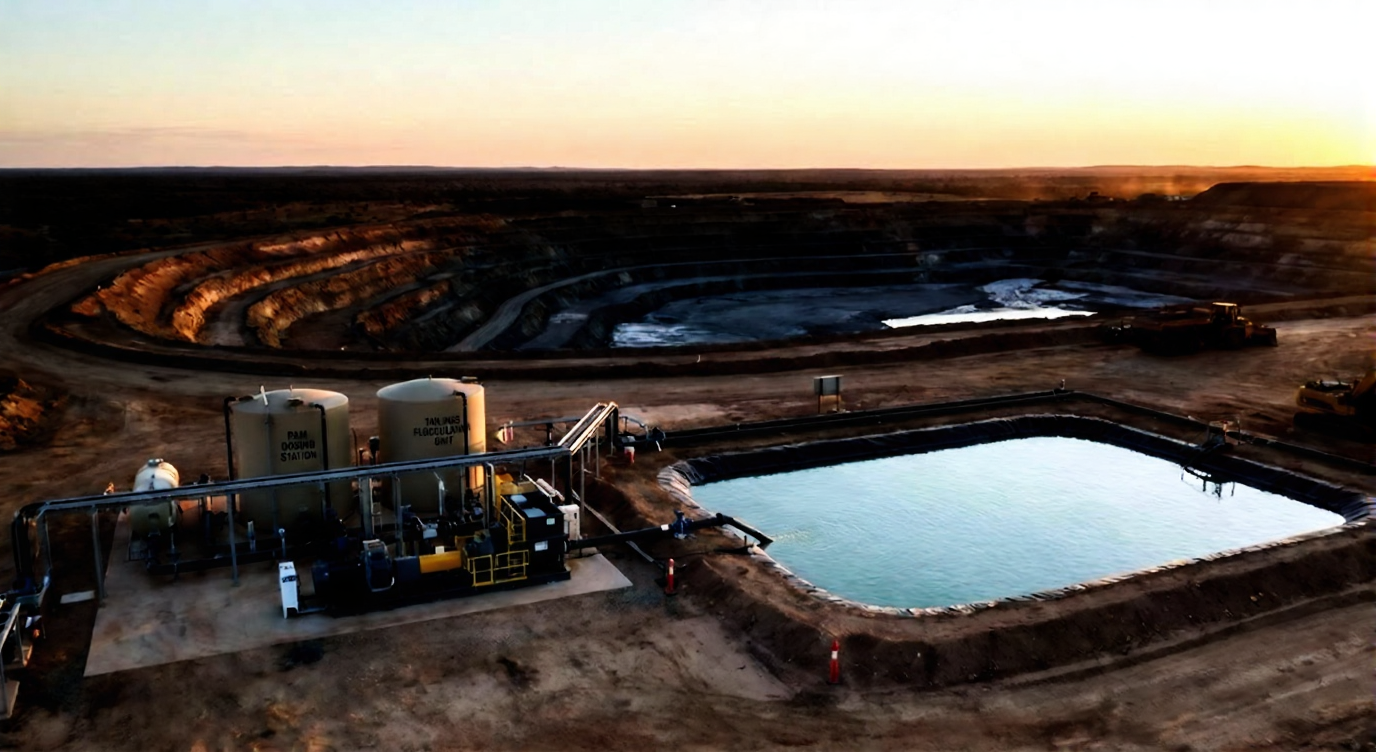
Mining operations generate massive volumes of contaminated water containing suspended solids, heavy metals, and chemical residues. Polyacrylamide (PAM) has become the industry standard for treating mining wastewater, offering efficient solid-liquid separation, metal removal, and water recovery. This guide provides practical methods for optimizing PAM use in mining applications.
Mining wastewater presents unique challenges that make PAM essential:
High Solids Concentration: Mine water contains 10,000-100,000 mg/L suspended solids—far exceeding typical wastewater levels. Standard coagulants can't handle this load effectively.
Heavy Metal Contamination: Mining releases arsenic, lead, mercury, copper, and zinc into water. These metals pose serious environmental and health risks requiring specialized treatment.
Water Scarcity: Many mines operate in arid regions where water is precious. PAM enables 70-90% water recovery, reducing freshwater consumption and costs.
Regulatory Pressure: Discharge limits for mining wastewater are strict. Failing to meet standards results in hefty fines, operational shutdowns, and environmental damage.
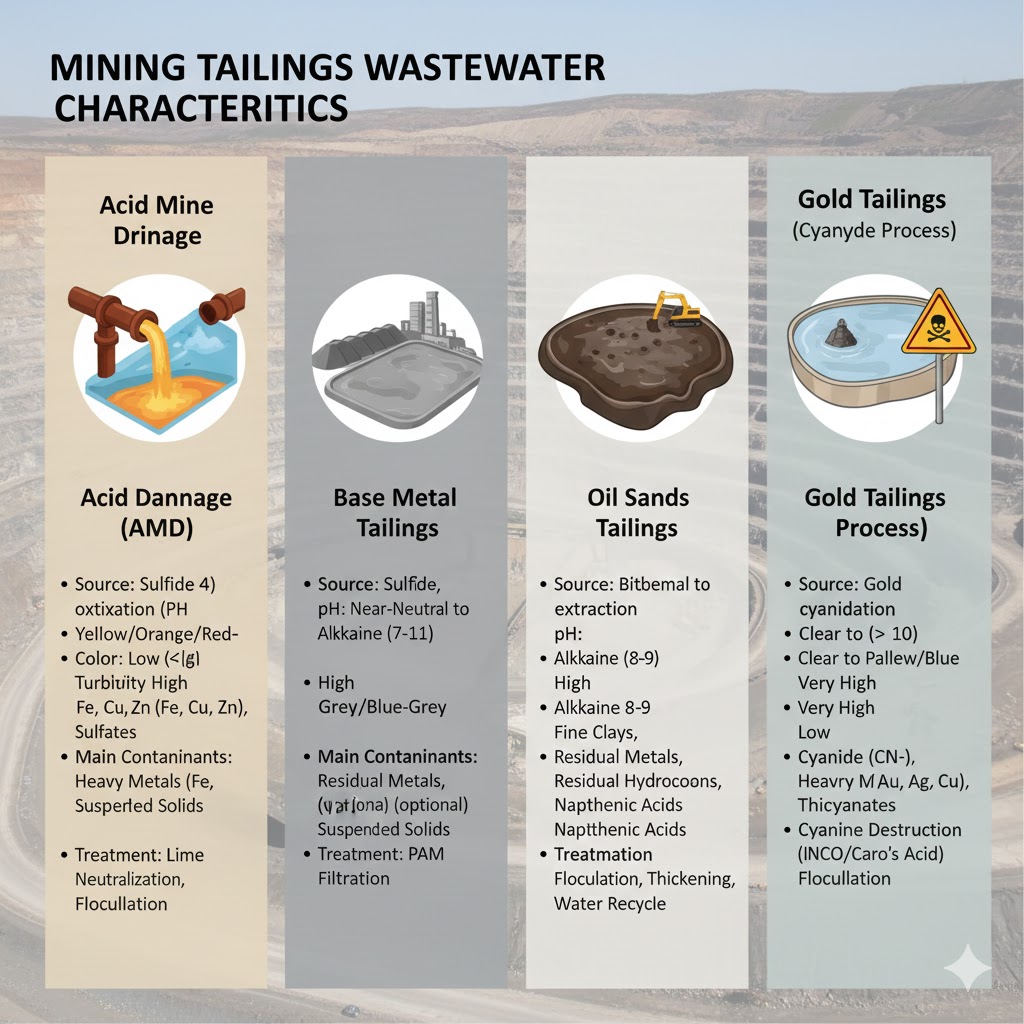
Characteristics:
● Extremely high suspended solids (50,000-200,000 mg/L)
● Fine particle size (1-50 microns)
● pH varies by ore type (acidic for sulfide ores, alkaline for carbonate ores)
● Contains processing chemicals (flotation reagents, grinding aids)
Challenges: Ultra-fine particles resist settling, high water volume, chemical interference
Characteristics:
● Moderate solids (5,000-50,000 mg/L)
● Heavy metal content varies by ore
● Contains grinding media residues
● Recycled multiple times in circuit
Challenges: Accumulated contaminants, water chemistry changes
Characteristics:
● Low pH (2-4) from sulfide oxidation
● High dissolved metals (Fe, Al, Mn, Zn, Cu)
● Sulfate concentration >1,000 mg/L
● Orange/red coloration from iron precipitation
Challenges: Extreme pH, high metal toxicity, continuous generation for decades
Characteristics:
● Lower solids (<5,000 mg/L)
● Groundwater quality influenced by geology
● May contain hydrocarbons from equipment
● Large volumes requiring treatment
Challenges: Variable quality, continuous flow
| Mining Application | Recommended PAM | Molecular Weight | Charge Density |
|---|---|---|---|
| Tailings Thickening | Anionic | 12-18 million | 10-30% |
| Sludge Dewatering | Cationic | 8-12 million | 30-60% |
| Process Water Clarification | Anionic | 10-15 million | 20-40% |
| AMD Neutralization Sludge | Cationic | 10-15 million | 40-60% |
| Coal Washing | Anionic | 15-20 million | 25-35% |
Ore Type Matters:
● Copper/Gold: Anionic PAM, high MW (15-18M)
● Iron Ore: Anionic PAM, medium MW (12-15M)
● Coal: Anionic PAM, very high MW (18-20M)
● Phosphate: Anionic or nonionic, high MW
● Bauxite: Anionic PAM, medium-high MW
pH Optimization:
● pH 6-8: Anionic PAM works best
● pH 4-6: Nonionic PAM more effective
● pH >8: Anionic still effective, may need higher dose
● pH <4 (AMD): Neutralize first, then cationic PAM
Particle Size:
● Very fine (<10 microns): High MW PAM (>15M)
● Medium (10-50 microns): Medium MW (10-15M)
● Coarse (>50 microns): Lower MW acceptable (8-12M)
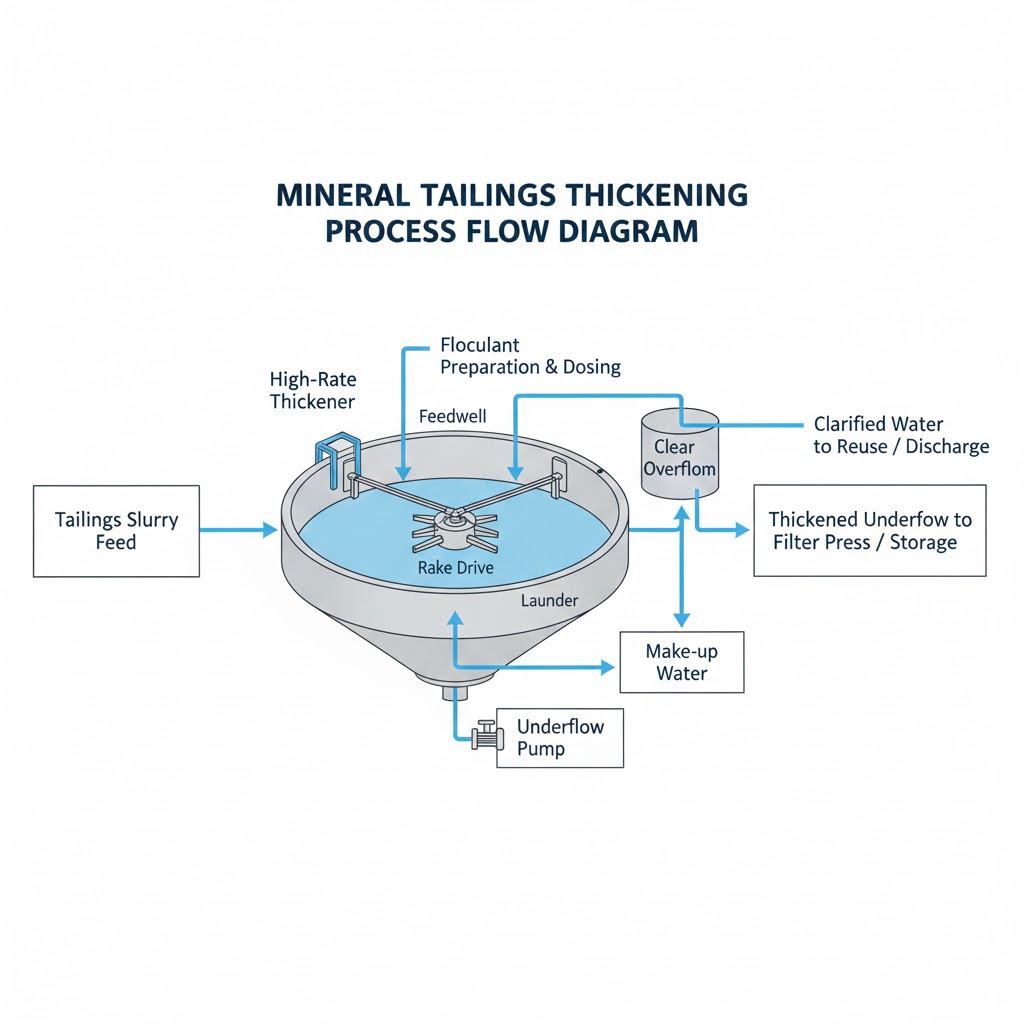
Objective: Concentrate solids from 15-30% to 50-70% for disposal or backfill
Procedure:
Step 1: Prepare PAM Solution
● Dilution: 0.1-0.2% (1-2 kg PAM per 1000L water)
● Aging time: 45-60 minutes
● Use clean water (not process water)
Step 2: Dose Calculation
Typical Range: 20-80 grams PAM per ton of dry solids
Start at 40 g/ton, adjust based on settling test
Step 3: Addition Point
● Add to feed well or feed pipe
● Ensure 10-30 seconds retention before thickener
● Use static mixer or turbulent pipe flow
Step 4: Monitor Performance
● Underflow density target: 50-70% solids
● Overflow clarity: <500 mg/L TSS
● Settling rate: Check rake torque
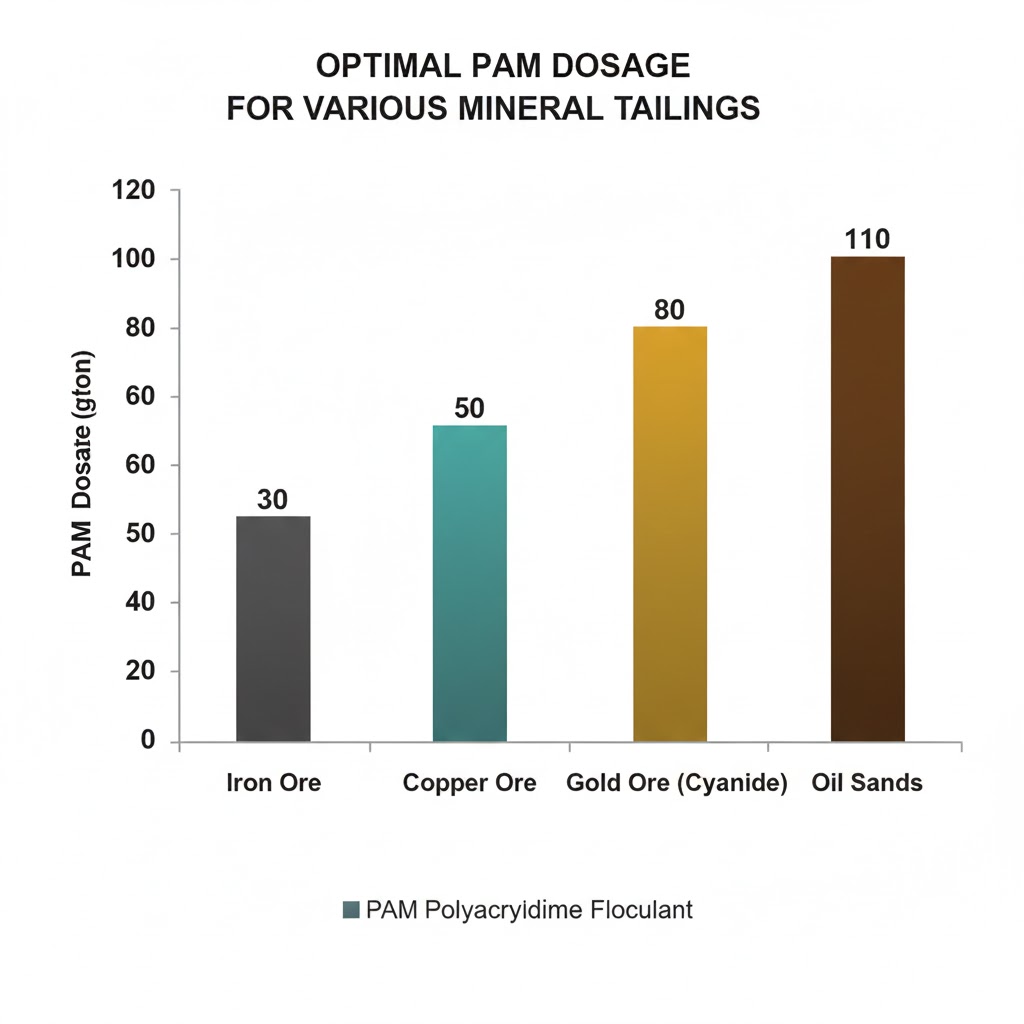
Common Dosages:
● Gold tailings: 30-60 g/ton
● Copper tailings: 40-70 g/ton
● Iron ore tailings: 20-50 g/ton
● Coal tailings: 50-80 g/ton
Objective: Recover process water for reuse, prevent metal loss
Procedure:
Step 1: Jar TestTest 3-6 PAM products at varying doses (10-50 mg/L)
Step 2: Preparation
● 0.05-0.1% solution
● Feed to clarifier inlet
● Mix thoroughly with incoming water
Step 3: Operation
● Typical dose: 5-20 mg/L
● Retention time: 2-4 hours
● Sludge removal: Continuous or batch
Results:
● Turbidity reduction: >90%
● Metal removal: 60-85%
● Water recovery: 85-95%
Objective: Reduce sludge moisture from 85-95% to 60-75%
Procedure:
Step 1: Select Cationic PAM
● Charge density: 30-60%
● MW: 8-12 million
● Test 3-5 products
Step 2: Optimize Dose
Belt Press: 3-8 kg PAM per ton dry solids
Filter Press: 2-5 kg/ton
Centrifuge: 4-10 kg/ton
Step 3: Conditioning
● Mix PAM with sludge 30-60 seconds before equipment
● Gentle mixing (avoid shear)
● Observe floc formation
Results:
● Cake dryness: 25-40% solids
● Filtrate clarity: <100 mg/L
● Volume reduction: 60-75%
Solids Concentration:
● Higher solids = higher PAM dose
● 10% solids: 30-50 g/ton
● 20% solids: 40-60 g/ton
● 30% solids: 50-70 g/ton
Particle Size Distribution:
● Finer particles need more PAM
● Wide size range needs higher MW PAM
● Single-sized particles: lower dose
Water Chemistry:
● High hardness (>300 mg/L): Increase dose 20-30%
● High salinity (>5,000 mg/L TDS): Use higher MW
● Extreme pH: Adjust pH first, then dose
Signs:
● Poor settling (restabilization)
● Viscous, sticky sludge
● Cloudy overflow
● Increased costs
Solution: Reduce dose 20-30%, retest
Signs:
● Slow settling
● Small, weak flocs
● High overflow turbidity
● Low underflow density
Solution: Increase dose 20-30%, consider higher MW
Don't Always Choose Cheapest:
Example calculation for 1,000 ton/day tailings:
Low-Cost PAM: $3.50/kg, dose 70 g/ton
● Daily cost: (1,000 × 70 / 1000) × $3.50 = $245/day
Premium PAM: $4.50/kg, dose 45 g/ton
● Daily cost: (1,000 × 45 / 1000) × $4.50 = $203/day
Savings: $42/day = $15,330/year with premium product
Too Concentrated (>0.2%):
● Difficult to dose accurately
● Viscosity issues
● Uneven mixing
Too Dilute (<0.05%):
● Large volumes to handle
● Degradation in storage
● High pumping costs
Optimal: 0.1-0.15% for most mining applications
Reusing clarified water saves:
● Freshwater costs
● Pumping energy
● Environmental discharge fees
Example: 10,000 m³/day mine water
● 85% recovery = 8,500 m³/day reused
● At $0.50/m³: $4,250/day savings
● Annual: $1.55 million
For difficult tailings:
1. Primary: Lower-cost anionic PAM (bulk flocculation)
2. Secondary: Small dose high-performance PAM (floc strengthening)
Total cost often 20-30% lower than single high-dose system
Cold Weather (<10°C):
● Increase dose 15-25%
● Use warmer preparation water
● Extend mixing time
Hot Weather (>30°C):
● Prepare fresh solution daily
● Store in cool location
● Reduce dose 10-15% if performance improves
Typical mining wastewater discharge limits:
| Parameter | Limit | PAM Treatment Result |
|---|---|---|
| TSS | <50 mg/L | 10-30 mg/L ✅ |
| Heavy Metals | Varies | 60-90% removal ✅ |
| pH | 6-9 | Adjust before PAM |
| COD | <100 mg/L | Usually compliant ✅ |
Safe Levels:
● PAM residual in treated water: <0.5 mg/L (typically achieved)
● Acrylamide monomer: <0.0005 mg/L (quality PAM products)
● Non-toxic to aquatic life at normal use levels
PAM-treated sludge:
● Generally non-hazardous (verify with local regulations)
● Can be used for mine backfill
● Reduced leaching compared to untreated tailings
● More stable, less erosion
Problem: High overflow turbidity, low underflow density
Causes & Solutions:
1. Wrong PAM type
● Solution: Test anionic vs. cationic
● Try higher molecular weight
2. Insufficient dose
● Solution: Increase 20-30%
● Check dilution accuracy
3. Poor mixing
● Solution: Verify addition point
● Ensure adequate retention time
4. Water chemistry change
● Solution: Check pH, hardness, temperature
● Adjust PAM type or dose
Problem: Filter press or centrifuge filtrate cloudy
Causes & Solutions:
1. Underdosing
● Solution: Increase cationic PAM 15-25%
2. Insufficient conditioning time
● Solution: Extend to 60-90 seconds
3. Excessive shear
● Solution: Reduce mixing intensity
● Check pump type and speed
Problem: Using more PAM than expected
Causes & Solutions:
1. Solids spike
● Solution: Monitor feed consistency
● Install flow-proportional dosing
2. Degraded solution
● Solution: Prepare fresh daily
● Check storage conditions
3. Equipment malfunction
● Solution: Calibrate metering pump
● Verify dilution system
Challenge: 50,000 ton/day tailings, fine particles, high water loss
Solution:
● Anionic PAM, 18M MW, 25% charge
● Dose: 45 g/ton (down from 65 g/ton with old product)
● Improved thickener design
Results:
● Underflow: 68% solids (was 55%)
● Water recovery: 92% (was 78%)
● PAM cost savings: $180,000/year
● Reduced water makeup: $650,000/year
Challenge: AMD neutralization sludge dewatering
Solution:
● Cationic PAM, 12M MW, 50% charge
● Dose: 6 kg/ton dry solids
● Filter press operation
Results:
● Cake: 38% solids (was 25%)
● Filtrate: <50 mg/L TSS (was 200 mg/L)
● Landfill volume reduction: 55%
● Annual savings: $420,000
● Wear dust mask (N95 minimum)
● Use in ventilated area
● Avoid skin contact (wear gloves)
● Clean spills immediately (very slippery when wet)
● Non-toxic but slippery
● Can cause temporary digestive upset if swallowed
● Rinse eyes immediately if contact occurs
● Keep preparation area well-lit and slip-proof
● Prevent spills into waterways
● Store away from extreme heat (>40°C)
● Keep containers sealed when not in use
● Dispose of expired product per regulations
Q: Can I use the same PAM for tailings and dewatering?
A: No. Tailings need anionic PAM, dewatering needs cationic. Wrong type gives poor results.
Q: Why does PAM work differently in summer vs winter?
A: Cold water slows dissolution and reduces PAM activity. Increase dose 15-25% in winter.
Q: Is PAM safe for the environment?
A: Yes, when used properly. Quality PAM has very low acrylamide monomer content (<0.05%).
Q: How long can I store prepared PAM solution?
A: Maximum 24 hours at room temperature, 72 hours refrigerated. Fresh is always best.
Q: Can PAM remove dissolved metals?
A: No. PAM removes suspended solids. Dissolved metals need chemical precipitation first.
Q: What's the difference between emulsion and powder PAM?
A: Emulsion: faster dissolving, higher cost, shorter storage. Powder: more economical, longer storage, requires proper mixing equipment.
✅ Select Right Type: Anionic for tailings, cationic for dewatering
✅ Optimize Dose: Start with jar tests, adjust for conditions
✅ Monitor Performance: Track settling, clarity, solids content
✅ Control Costs: Use premium products at lower doses
✅ Ensure Compliance: Meet discharge standards consistently
✅ Train Staff: Proper handling ensures safety and performance
Expected Benefits:
● 70-90% water recovery
● 60-85% heavy metal removal
● 30-50% reduced sludge volume
● ROI typically under 12 months
Tairan Chemical supplies mining-grade polyacrylamide worldwide:
Our Mining PAM Products:
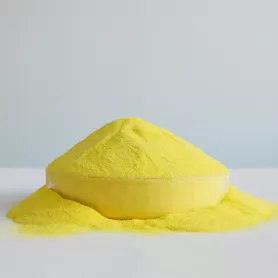
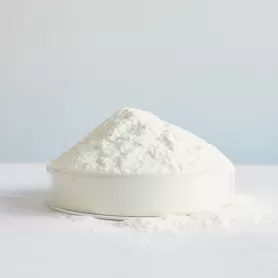
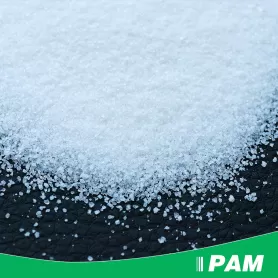
● Anionic PAM (10-20 million MW)
● Cationic PAM (8-15 million MW)
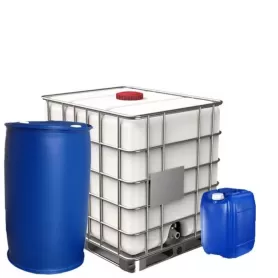
● Emulsion and powder forms
● Customized formulations for specific ores
Technical Support:
● Free jar testing and product selection
● On-site optimization assistance
● Dosage calculations and cost analysis
● Training for operations staff
Website: tairanchemical.com
Email: [info@tairanchemical.com]
Phone: [+86 18538555671]
Request samples and quotations
Copyright © 2024 Tairan Chemical. All rights reserved.