The jar settled well in the laboratory, but the clarifier is still cloudy. If a flocculant works in the jar but not at the plant, do not immediately assume that you need a different polymer. Check whether the water, polymer solution and dosing conditions are the same as those used in the test.
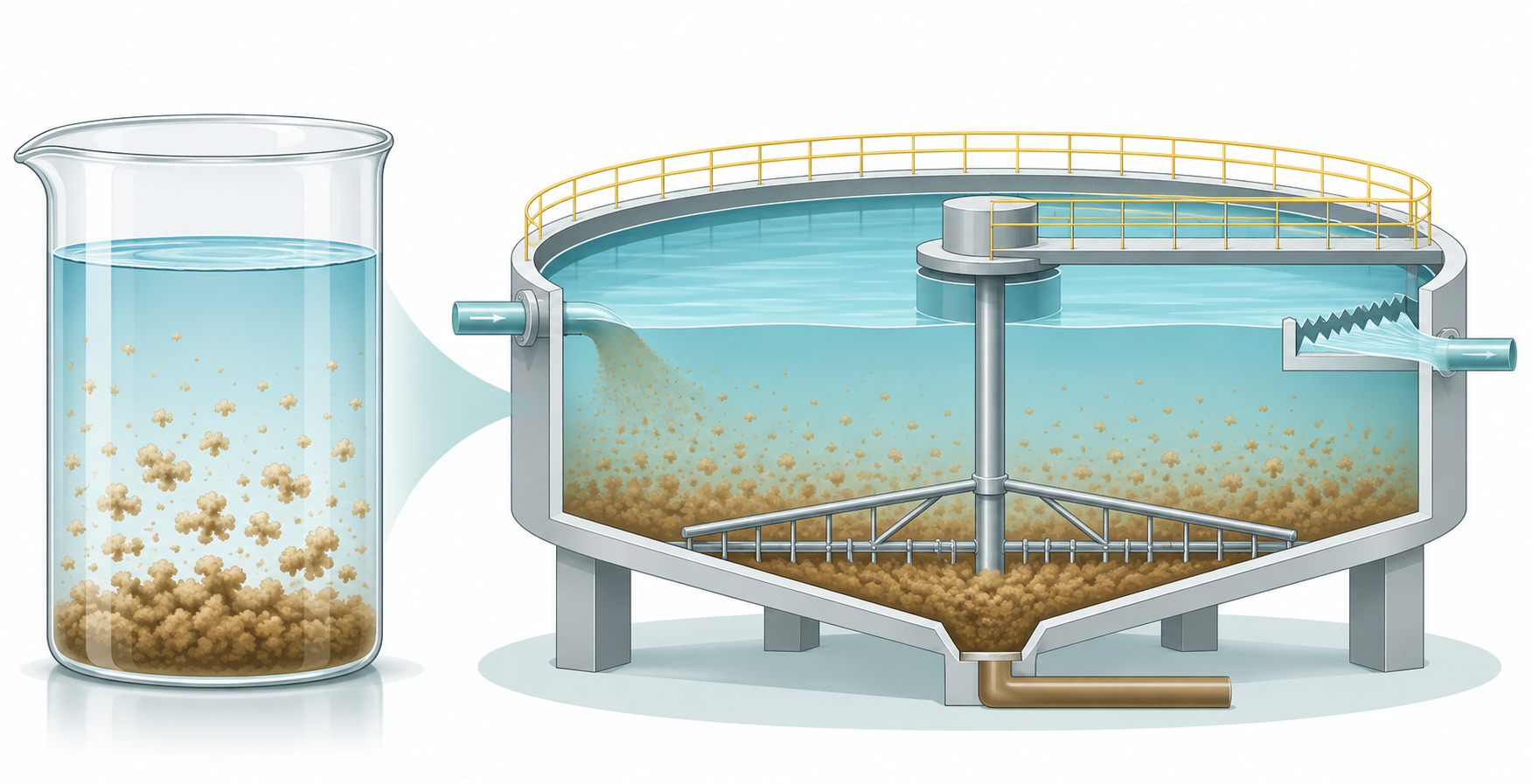
This guide covers industrial wastewater clarification and settling. Sludge dewatering needs separate bench and equipment trials. A settling jar alone cannot predict cake solids or solids capture.
Was the sample taken where the treatment chemicals actually meet the water? Production changes, cleaning cycles, rainfall and upstream treatment can change solids and water chemistry. A sample left to settle for hours may no longer represent what reaches the clarifier.
Record the sampling point and time, appearance, pH, temperature and relevant production changes. If the feed changes during a shift, take representative samples at different times. A good result on one sample is a useful starting point, not proof that the same dose will suit the whole day.
Compare the grade, make-up water, solution concentration and preparation sequence used in the laboratory and on site. Poor wetting can leave undissolved particles. Differences in water quality, mixing or solution age may also affect the result. Follow the product instructions and site safety procedures when preparing and handling polymer.
Look for lumps or a change in appearance, and note when each solution was made. A clear-looking solution alone does not prove that the polymer is fully hydrated. If the laboratory and plant use different preparation methods, record those differences before changing the dose.
For polymer dosing in wastewater treatment, a pump setting is not the same thing as a verified flow. Use a safe, site-approved method to check the delivered solution flow. Compare it with the wastewater flow and the prepared solution concentration. When comparing doses, use the same product-mass basis and units; do not compare a volume of dilute solution directly with a mass of dry powder.
Check where the polymer enters the line. It needs contact with the treated water and enough mixing to disperse. Excessive shear after flocs form may break them. Any adjustment should follow site procedures and equipment instructions.
If the jar test used a coagulant such as PAC, check the plant coagulant dose and addition sequence too. Note the time between additions, mixing conditions and available contact time. A jar test is a screening tool; the pipework, mixers and clarifier do not reproduce the jar exactly.
Use one comparison sheet for both tests:
| Check | Jar test | Plant |
| Sample point and time | Record | Record |
| Coagulant and addition sequence | Record | Record |
| PAM grade, solution concentration and age | Record | Record |
| Dose basis and actual delivered flow | Record | Verify safely |
| Mixing and contact conditions | Describe | Describe |
| Floc appearance and treated-water quality | Observe | Observe |
Where the process allows, change one practical variable at a time and record the result. If the discrepancy remains, send the comparison sheet and a description of the representative sample to your supplier before selecting another grade.
Related reading: PAC and PAM dosing: sequence, mixing and jar testing · PAM powder storage and caked bags.