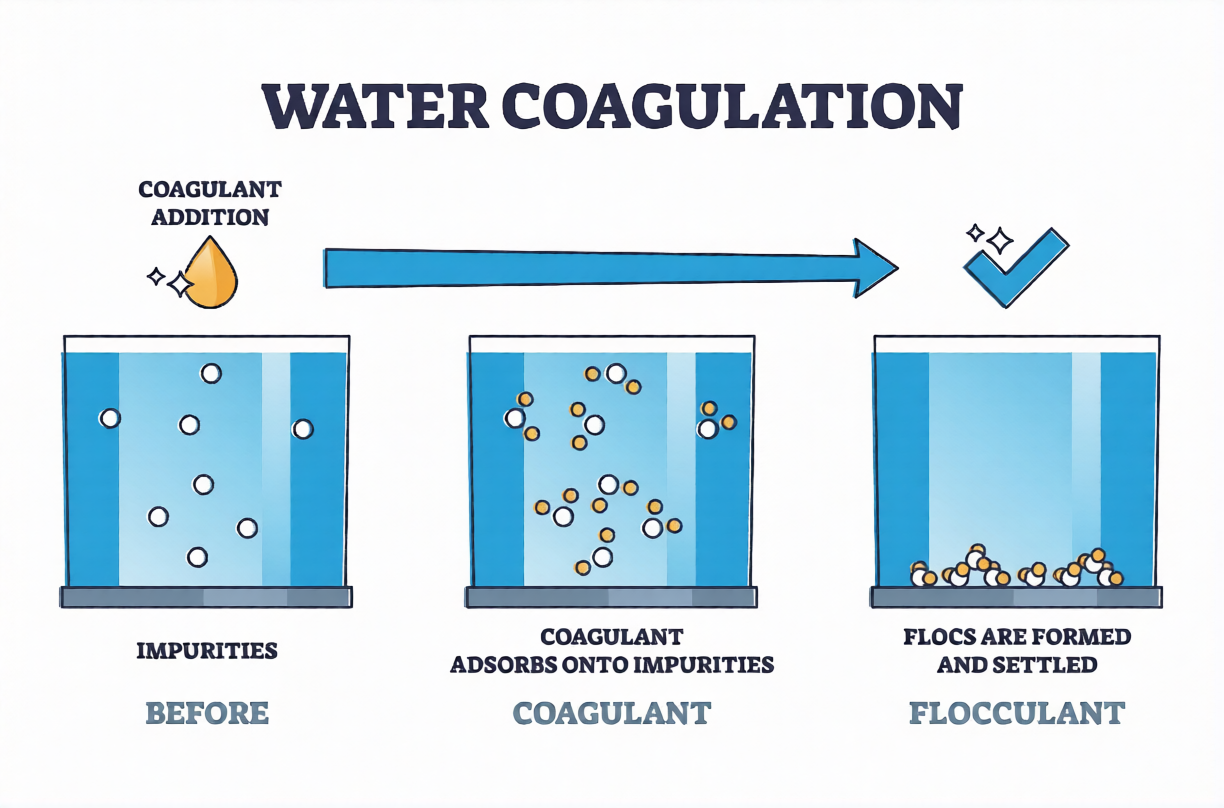
Any engineer who has spent time on a treatment plant floor knows this truth: a single chemical agent rarely wins the fight against complex industrial wastewater. After two decades of field work across municipal plants, mining operations, and textile mills, I can say without hesitation that the PAC-PAM combination remains the most reliable, cost-effective solution in the industry's arsenal — when executed correctly.
Here's why this pairing works so well at a molecular level:
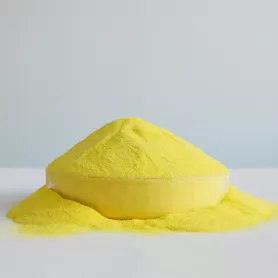
● PAC (Coagulation Stage): As an inorganic polymeric coagulant with the structural formula [Al2(OH)nCl6−n]m[Al_2(OH)_nCl_{6-n}]_m[Al2(OH)nCl6−n]m, PAC's primary role is charge neutralization. The high-charge aluminum ions it releases rapidly destabilize colloidal particles suspended in water, causing them to collide and aggregate into microscopic ’micro-flocs.’ Think of PAC as the scout — it breaks down the enemy's defenses.
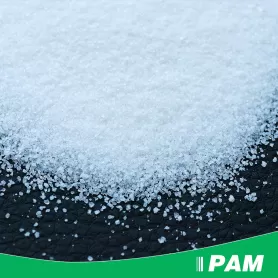
● PAM (Flocculation Stage): As an organic polymer flocculant, PAM operates through an entirely different mechanism: adsorption bridging. Its exceptionally long molecular chains act like a vast net, capturing the micro-flocs generated by PAC and binding them into large, dense, rapidly settling floc masses. PAM is the closer — it seals the deal.
The reason this synergy consistently outperforms single-agent treatments lies in this division of labor. PAC handles the chemistry of destabilization; PAM handles the physics of aggregation. Neither can do the other's job effectively.
In the field, I've seen plants spend months troubleshooting poor effluent quality, only to discover the root cause was a reversed dosing sequence. The order of addition isn't a recommendation — it's a technical absolute.
Step 1: PAC First — Flash Mixing
Add PAC under high-speed agitation, typically at 150–200 RPM. The goal is to disperse aluminum ions instantaneously and uniformly throughout the water volume to complete charge neutralization before micro-floc formation begins.
Recommended mixing time: 1–2 minutes
Step 2: PAM Second — Slow Mixing
Only after micro-flocs are visibly forming should you introduce the pre-diluted PAM solution. At this stage, reduce agitation speed immediately — typically to 30–60 RPM. This is where most operators make their second critical mistake: maintaining high shear rates after PAM addition will mechanically shear apart the very floc structures you're trying to build.
Recommended mixing time: 3–5 minutes
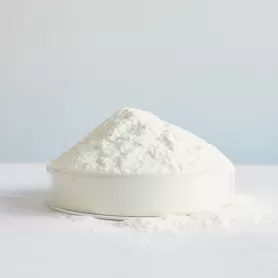
⚠️ Field Warning — Do Not Skip This:Never blend PAC powder and PAM powder together for a single combined addition. The charge interaction between the two will cause immediate mutual interference, negating the effect of both agents simultaneously. Beyond the efficiency loss, the resulting gel-like mass is notorious for blocking dosing pumps and pipelines — a maintenance headache that costs far more than the chemicals themselves.0
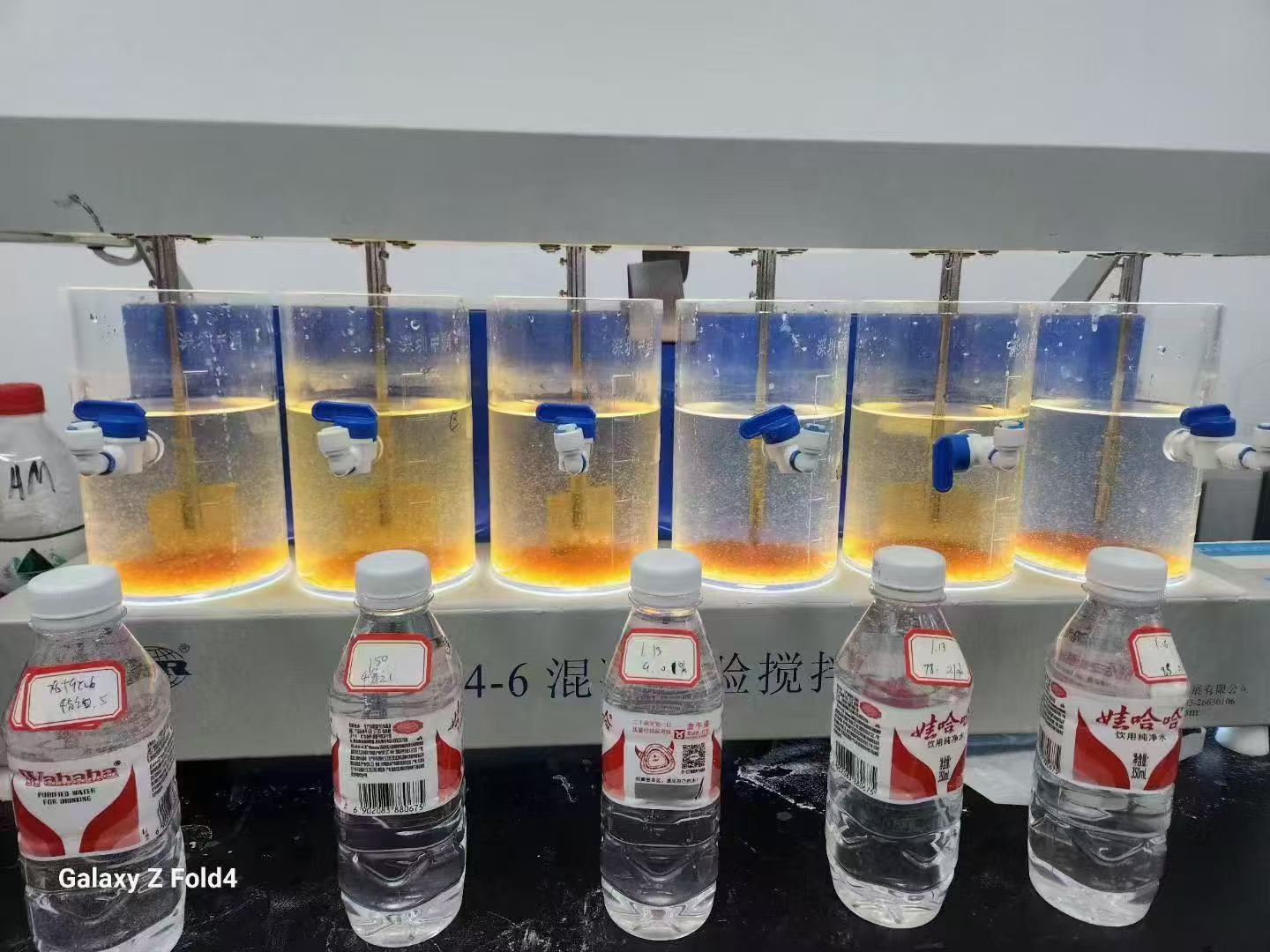
This is the mistake I encounter most frequently when auditing new treatment operations, and it's entirely preventable.
The correct PAM dissolution range is 0.1%–0.3% w/v.
When I ask operators why they're running at 3–5% concentrations, the answer is usually the same: ’We thought a more concentrated solution would be more effective.’ This intuition is understandable — but it's wrong, and here's exactly why:
At 5% concentration, you are not preparing a PAM solution. You are preparing an industrial adhesive. The resulting liquid exhibits extreme viscosity that creates three compounding problems:
● Uneven distribution: The agent cannot disperse homogeneously through the water column, creating localized zones of gross overdose and large dead zones with no treatment at all.
● Equipment damage: High-viscosity fluids exert excessive stress on metering pumps and pipeline joints, accelerating wear and increasing maintenance frequency.
● Molecular chain collapse: This is the critical chemistry that most operators don't see. Tairan Chemical's laboratory data confirms that PAM molecular chains only achieve full extension — and therefore maximum adsorption bridging capacity — at concentrations below 0.5%. At higher concentrations, chain entanglement prevents the polymer from doing its job. You are literally paying for a product you have disabled.
Dilute it properly. The chemistry will reward you.
There is no universal PAC:PAM ratio. The optimal combination depends on the specific suspended solid characteristics, pH, temperature, and target effluent quality of each application. Based on our technical team's accumulated field data, the following starting points have consistently delivered strong results:
| Application | Recommended PAC Grade | Recommended PAM Type | Expected Outcome |
|---|---|---|---|
| Coal washing / mineral processing wastewater | 28% Industrial Grade PAC | High molecular weight anionic PAM | Rapid sedimentation; clarified water suitable for process recycling |
| Municipal sludge dewatering | 30% Spray-dried PAC | High-charge cationic PAM | Significant reduction in filter cake moisture content |
| Textile / dyeing wastewater | 30% High-purity PAC | Medium-charge cationic PAM | Effective decolorization; measurable COD reduction |
These combinations are starting points for jar testing, not fixed prescriptions. Real-world conditions always warrant on-site verification.
Technical knowledge only delivers value when it's backed by consistently reliable raw materials. At Tairan Chemical, we understand that for our clients in demanding markets, supply chain failure is not a minor inconvenience — it is a plant shutdown.
Precise Quality Control
Our 30% liquid PAC is manufactured under strict quality management, with Al2O3Al_2O_3Al2O3 content maintained within a tolerance of±0.3%. This level of consistency matters: even small deviations in active content force operators to re-adjust dosing parameters, adding labor cost and treatment variability.
Purpose-Built Logistics for Demanding Markets
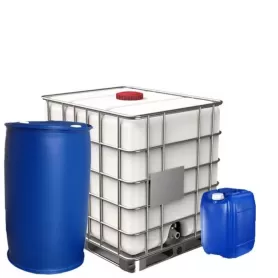
We do not ship to Chennai, Chittagong, Moscow, or Novorossiysk with standard packaging and hope for the best. Our South Asian shipments use reinforced moisture-barrier packaging designed specifically for the high-humidity conditions and extended transit times of Bay of Bengal routes. For Russian market clients, packaging is engineered to maintain product integrity through the freeze-thaw cycles of long-haul overland and rail freight. These are not marketing claims — they reflect hard lessons learned from watching competitors' products arrive at port degraded and unusable.
Complimentary Jar Test Technical Support
For contracted clients, our technical team provides remote jar test guidance to determine the optimal PAC:PAM dosing ratio for your specific wastewater matrix. You bring the problem; we help you solve it before a single bulk order is placed.
The PAC-PAM combination is one of water treatment's most elegant tools — but only when applied with discipline. Respect the dosing sequence. Prepare PAM at the correct concentration. Match the product grades to your application.
Done correctly, this approach consistently delivers 15–20% reductions in total chemical consumption compared to improperly executed single-agent or combined dosing programs. In a high-volume treatment operation, that margin compounds into significant annual savings.
If you're evaluating your current treatment chemistry or entering a new application, our technical team is available for consultation. The right combination, applied correctly, is the foundation of every efficient and cost-effective operation.
Tairan Chemical — Professional Water Treatment Solutions, Delivered Globally.