When dry polyacrylamide powder forms gel-like lumps in a preparation tank, the first instinct may be to increase the mixer speed. That is not necessarily the best place to start. The important question is what happened when the powder first met the water.
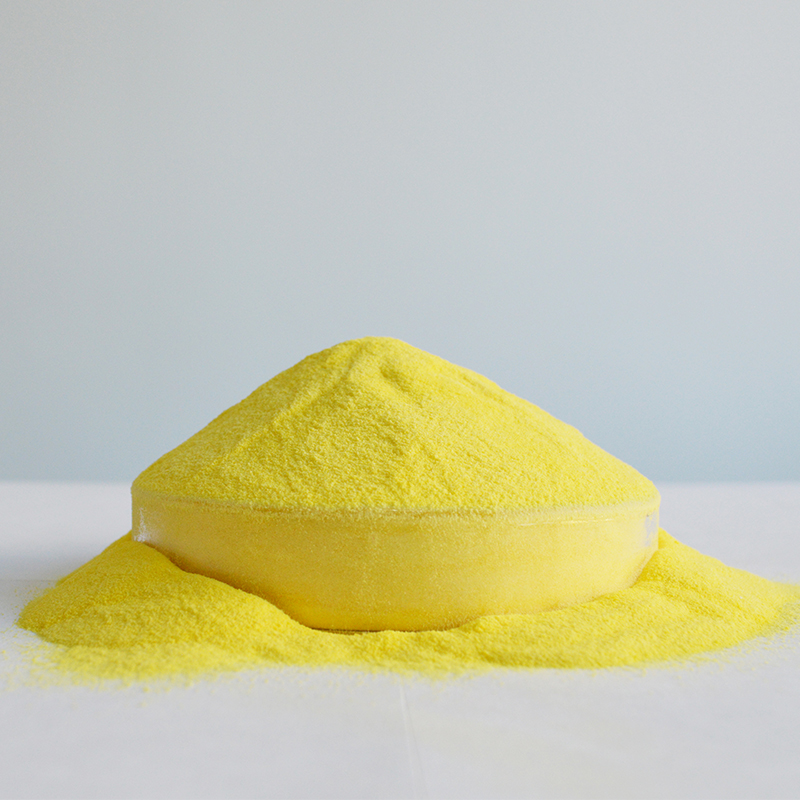
 Polyacrylamide powder — illustrative product image, not a documented test.
These lumps, often called fish eyes, can form when powder particles clump during wetting. The outside hydrates while material inside the lump may remain incompletely wetted. Once the surface has formed a gel layer, water has a harder path to the centre. A solution containing visible lumps may not behave like a uniformly prepared batch.
The checklist below is intended for dry PAM systems. Follow the specific product documentation, equipment instructions and site safety procedures before changing operating conditions.
These are possible explanations, not a diagnosis. Compare observations with the equipment instructions and check one variable at a time. Do not open guards or touch moving equipment.
Possible cause: Powder may be entering faster than the wetting system can disperse it, or wetting water may be uneven.
Check and next step: Observe the inlet, wetting point and water supply. Record the feed pattern and water flow; consult the equipment procedure before adjusting.
Possible cause: Bridging, moisture or a feeder obstruction may be interrupting delivery.
Check and next step: Examine the hopper, feeder and powder condition. Have an authorised operator inspect isolated equipment and document any obstruction.
Possible cause: Earlier wetting may have been incomplete, or preparation conditions may not match the grade.
Check and next step: Review the wetting point, batch record and product instructions. Compare with a correctly prepared representative trial and follow site procedures.
Possible cause: Deposits or residues may be present in transfer equipment; observation alone cannot establish the cause.
Check and next step: Compare samples before and after transfer. Ask maintenance to inspect the line and pump under isolation.
For laboratory test solutions and the PAC/PAM jar-test sequence, see the existing jar-test guide. This article focuses on diagnosing a dry-powder preparation system in operation.
Watch the first wetting point during normal operation, if it can be observed safely. Look for powder falling into the same spot, collecting on a damp surface or entering as intermittent clumps instead of a steady feed. Record when the lumps appear: immediately at the inlet, during tank mixing, or only after transfer.
Do not open guards or reach into moving equipment. If the wetting point cannot be inspected safely, ask the equipment operator or maintenance team to check it under the site's isolation procedure.
A powder feeder and its wetting water should be assessed as one system. Check for interrupted water supply, a blocked or damp feeder, bridging in a hopper, and changes in the powder feed pattern. Compare the actual setup with the equipment maker's instructions. A stable average feed rate does not rule out short surges.
Also inspect the powder packaging and storage conditions. Moisture exposure or caking in the bag can make powder feed less uniform, but a lump in a tank is not by itself proof of a product defect.
After initial dispersion, the polymer needs time and suitable mixing to hydrate. The appropriate preparation concentration, mixing arrangement and time depend on the grade and equipment. Avoid treating one supplier's RPM or time as a universal setting: the same RPM can produce different mixing conditions in different tanks.
Do not sharply increase mixing merely to break visible lumps. Excessive shear can affect polymer performance, while a gel-coated lump can remain difficult to wet internally. Use the equipment supplier's guidance for dealing with an affected batch and for safe cleaning.
Use the same product grade and a representative water sample when investigating a recurring problem. Change one practical factor at a time where feasible and document the result. The goal is not to declare a universal recipe, but to make the next comparison meaningful.
| Record | What to note |
|---|---|
| Product | Grade, batch identification and condition of the unopened package |
| Water | Source and any known changes in quality or temperature |
| Equipment | Feeder, wetting arrangement, mixer and visible obstructions |
| Preparation | Powder addition sequence, water flow and preparation conditions |
| Observation | Where and when lumps appeared; appearance after the specified hydration period |
| Follow-up | Adjustment made, repeat-batch observations and equipment or supplier advice |
If lumps continue after the feed and wetting arrangement have been checked, share the record with the equipment supplier and the PAM supplier. Include a photograph only if it accurately shows the actual system or sample. Keep the product label and applicable technical documents available; avoid diagnosing the cause from a photograph alone.
Related pages: PAM powder products · PAC/PAM jar-testing guide · Contact Tairan
References: Water Research Commission; Pennsylvania DEP chemical feed training.