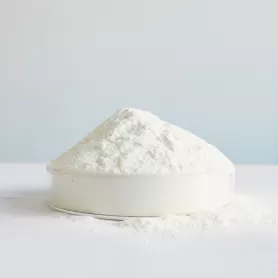
Two PAC quotations can look similar and still represent different purchasing decisions. A liquid product arrives as a solution; a powder usually needs preparation before it can be fed. The right choice depends on the actual grades, freight, storage space, dosing equipment and treatment results—not just the price per tonne.
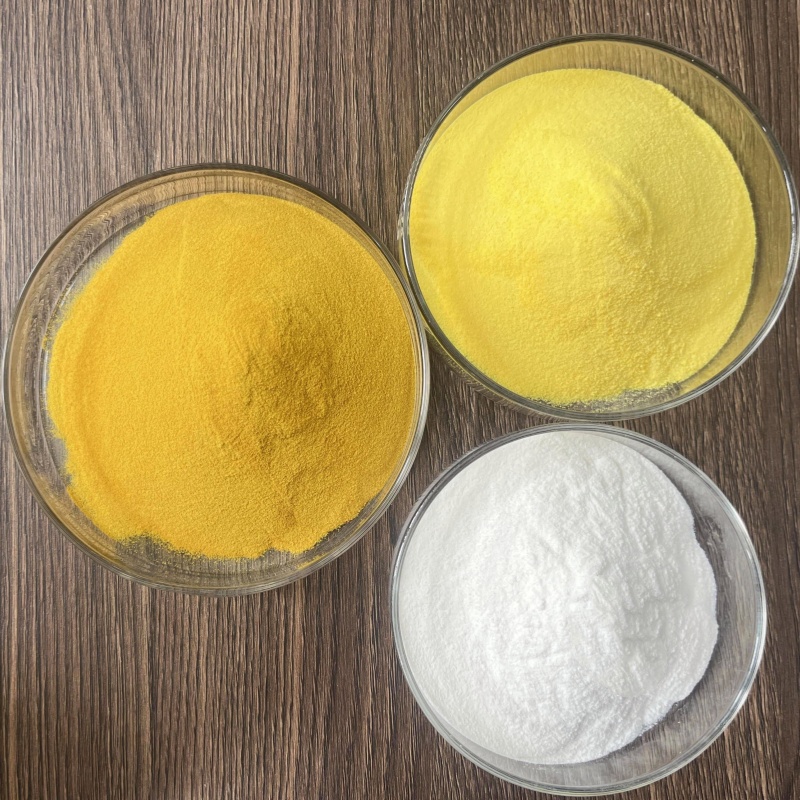
Polyaluminum chloride (PAC) is used as a coagulant in water and wastewater treatment and is supplied in both liquid and solid forms. This guide focuses on industrial wastewater. It is a comparison framework, not a recommendation to use a particular grade or a claim that both forms are available for every order.
Ask each supplier for the product form, current technical data sheet (TDS), safety data sheet (SDS), specification and quotation. Check what each percentage measures and whether it is reported by mass or volume. For a liquid priced by volume, density is needed before converting that price to a mass basis.
Aluminium oxide (Al₂O₃) content can help establish a common reporting basis when both suppliers use comparable methods and units. It is not a treatment-performance guarantee: basicity, formulation and water chemistry may differ. Use representative trials to compare the actual dose required to meet the same treatment objective.
On a small screen, swipe sideways to see the full table →
| Decision | Liquid PAC | Powder PAC |
|---|---|---|
| Receipt | Check the delivery container, identification and transfer arrangements. | Check bags or other supplied packaging for damage and moisture exposure. |
| Storage | Confirm compatible tanks, secondary containment and temperature limits in the product documents. | Keep packaging protected from moisture and damage under the supplier's storage instructions. |
| Preparation | Confirm whether the specific grade can be fed as supplied or needs dilution. | Confirm make-down equipment, water supply, feeding and mixing requirements. |
| Dosing | Check pump capacity, chemical compatibility and the actual supplied concentration. | Check both preparation capacity and the pump settings for the prepared solution. |
| Logistics | Compare delivered quantity and cost using the actual liquid concentration and packing. | Include preparation labour, handling losses and equipment alongside freight. |
Do not assume one form is always cheaper or simpler. For example, a plant with existing liquid storage may face different conversion costs from a site that already has a powder make-down system.
For each candidate, calculate the landed product cost and include preparation, labour, maintenance and relevant handling or disposal costs. Compare these against the measured product dose at the same treatment target. Record the basis clearly: cost per kilogram of delivered product is not the same as cost per cubic metre of water treated.
A useful comparison has three inputs: the quantity of each product used, the volume of wastewater treated, and the costs relevant to that site. Sludge quantity and disposal requirements may also affect the decision; measure them rather than assuming they will be identical.
Suppose two quotations are expressed by weight: 100 kg of powder at 30% Al₂O₃ for $100, and 300 kg of liquid at 10% Al₂O₃ for $120. On paper, each contains 30 kg of Al₂O₃ equivalent. The product cost is therefore $3.33 and $4.00 per kg of Al₂O₃ equivalent, respectively.
These numbers are hypothetical arithmetic, not Tairan specifications, prices or recommended grades. They exclude freight, storage, preparation and other site costs. Equal Al₂O₃ equivalent does not mean equal treatment performance or dosing: use trial results to calculate the cost of meeting the same treatment target.
Collect a representative water sample and define the target—for example, a site-specific clarity or solids-removal requirement. Record the product grade, batch, preparation method, dose basis, pH, mixing and settling observations for each candidate. Use the same evaluation criteria and document any operational constraints.
Jar testing can narrow the options, but a laboratory result does not automatically predict full-scale performance. Confirm promising candidates under an appropriately controlled site trial before changing an operating programme.
Which specific grade and form are being quoted, and what is the applicable specification?
What do the reported concentration and basicity values mean, and what methods are used?
What preparation, storage and dosing instructions apply to this grade?
What documents, packaging options and delivery terms are available for the destination?
Which water-quality details would help design a representative comparison?
For preparation steps after a grade has been selected, see How to Prepare PAC Solution. For industrial product options, see Tairan industrial-grade PAC.